Prediction markets are expanding rapidly, with multiple platforms introducing new ways for users to trade on real-world outcomes.
But as sports are increasingly driving volume in these markets, some founders tend to believe that theinfrastructure itself has to evolve.
In the following conversation, Amit Mahensaria explains why his company PRED is built around an exchange model rather than a traditional sportsbook. He also explains how it approaches liquidity and speed in live sports trading, as well as why hebelieves aligned incentives between platfrom and traders are particularly important when it comes to building long-term trust.
PRED positions itself as a true peer-to-peer sports prediction exchange rather than a sportsbook or a house-backed market. For readers familiar with platforms like Polymarket or Kalshi, what are the most important structural differences in how PRED runs markets, makes money, and treats users?
The simplest way to understand PRED is this: we are an exchange, not a sportsbook. On a traditional sportsbook, you trade against the house. The house sets the odds, takes the other side of your position, and profits when you lose. That creates a fundamental conflict of interest, and it’s why every major sportsbook in the world eventually limits or bans their best customers.
On PRED, users trade directly with each other. We match buyers and sellers. We never take the other side of your trade, and we never take a directional position against our users. Our revenue comes from trading fees on matched orders. We make money when people trade, not when people lose. That alignment changes everything.
Compared to Polymarket or Kalshi, the key difference is that we’re purpose-built for sports. Right now, these general-purpose prediction markets are deriving majority volume through sports, but it is coincidental, they are not designed for sports. PRED is sports trading infrastructure from the ground up. That means features like cross-matching, where a single order on one outcome automatically generates liquidity across all related outcomes in the same match. It means capital efficiency mechanics where your collateral works harder because the system understands the structure of sports markets. And it means live match handling that’s designed for the high speed and volatility of in-play sports, not tweet speculation or political events.
Polymarket proved that on-chain prediction markets work. We’re building the next step: specialised infrastructure for the world’s largest prediction market, which is sports.
Speed and liquidity are everything in live sports markets. You’ve said PRED is currently the fastest exchange for sports predictions—can you break down what that actually means in practice, and how your architecture on Base enables that performance advantage?
In live sports, a goal can shift a market by 30 or 40 percentage points in seconds. If your platform can’t keep up with that, traders either miss opportunities or get filled at stale prices. Both outcomes destroy trust.
We execute trades in under 200 milliseconds. To put that in context, most on-chain prediction platforms take multiple seconds to confirm a trade. Traditional sportsbooks can take even longer during peak moments because they’re adjusting lines. Our execution speed means that when you see a price on PRED, you can actually get it. That sounds basic, but it’s genuinely rare in this space.
We built on Base, Coinbase’s Layer 2, for three reasons. First, the transaction costs are fractions of a cent, which matters enormously for a trading use case where gas fees can eat into your edge. Second, we get sub-second finality, which is the baseline requirement for live sports markets. Third, the Base ecosystem is where serious consumer crypto applications are being built right now, and those users understand the DeFi primitives that make an exchange model work.
The combination of on-chain settlement with off-chain order matching gives us the transparency of blockchain with the performance of a centralised exchange. You get the speed which is needed for live sports.
Many traders in both Web2 sportsbooks and Web3 prediction markets worry about one thing above all else: getting banned for winning. PRED has taken a strong stance on never banning winners. Why was that policy non-negotiable for you, and what does it say about the kind of market you’re trying to build?
This one is personal. I’ve been involved in sports trading for over 22 years. I’ve watched the best analysts and traders I know get systematically shut out of platform after platform simply for being good at what they do. They spend half their time on logistics, spreading funds across accounts, using friends and family, hunting for books that haven’t limited them yet. It’s absurd.
The reason sportsbooks ban winners is structural, not personal. When the house is your counterparty, every dollar you win is a dollar they lose. Of course they’re going to remove the people who cost them the most money. It’s rational behaviour within a broken model.
On an exchange, that incentive doesn’t exist. We don’t take the other side of your trade. The more skilled traders we attract, the more volume they generate, the deeper our markets become, and the better the experience gets for everyone. Winning traders are our most valuable users, not our biggest liability.
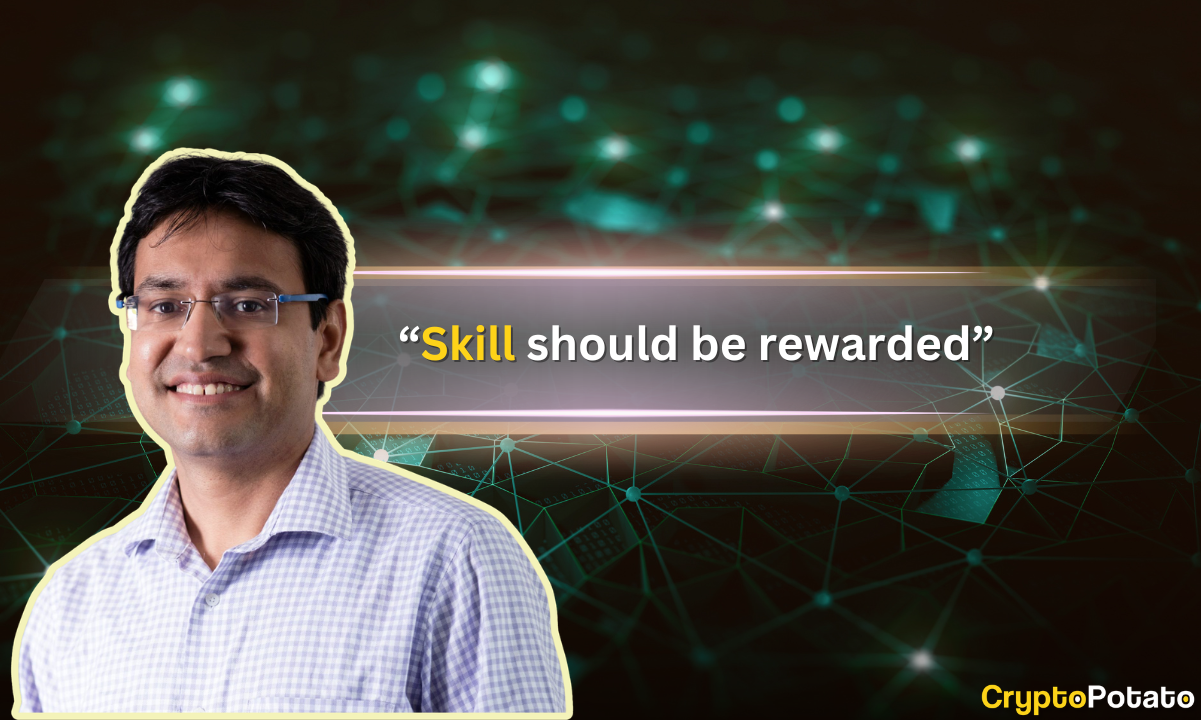
This wasn’t some marketing decision. It’s a direct consequence of our exchange architecture. We structurally cannot profit from your losses, so we have zero incentive to punish your wins. That’s the kind of market I wanted to build from day one: one where skill is rewarded, not penalised.
One of PRED’s talked-about features is the 5–6% native yield on user deposits, which is rare in prediction markets today. How does this yield work mechanically, and why did you feel it was important to design capital efficiency into the core user experience rather than treat it as an add-on?
Think about what happens on a traditional sportsbook or even most prediction platforms. You deposit funds, and that capital sits idle until you place a trade. If you’re waiting for the right market or the right price, your money is doing nothing. On some platforms, your deposits might sit uninvested for days or weeks while you’re being selective about your entries.
On PRED, your deposited capital earns yield while it’s in your account. We’ve partnered with global institutions to generate yield on the underlying stablecoin deposits. Also since we don’t have huge marketing costs like deposit bonus, we are able to pass on a portion of our trading fees to the users in the form of yield. Your capital is working for you even when you’re not actively trading.
We designed this into the core experience because capital efficiency is something serious traders think about constantly. If you’re a professional, the opportunity cost of idle capital matters. Offering native yield means traders can keep larger balances on PRED without feeling like they’re sacrificing returns elsewhere. It removes a friction point that most platforms don’t even acknowledge exists.
This is also a statement about how we think about the relationship between a platform and its users. Your money should work for you. That’s a simple principle, but almost nobody in this industry follows it.
Your earlier career spans investment banking, private equity, and building Impartus into a scaled edtech platform that saw real institutional adoption. How did that background shape your thinking around market design, incentives, and long-term trust when building PRED?
Each chapter taught me something different. Investment banking and private equity gave me a deep understanding of how markets work, how liquidity is structured, and how incentive alignment between participants determines whether a market thrives or collapses. You learn quickly that markets only work sustainably when the operator’s interests are aligned with the participants.
Building Impartus, which was acquired by upGrad and scaled to two million users, taught me something completely different. It taught me how to build products that earn users and institutional trust over time. They adopt because you prove reliability, transparency, and consistent delivery. That patience and focus on earned trust is something I brought directly to PRED.
And then there’s the 22 years of sports trading that runs underneath all of it. That’s where I experienced firsthand every problem PRED is built to solve. Getting limited, getting banned, slow platforms, pain of cashing out, watching platforms change the rules, watching the industry punish skill. That frustration is what made me want to build the alternative.
The combination of those experiences is why PRED isn’t just a crypto product with sports bolted on. It’s built by someone who understands both market infrastructure and the specific pain points of being a serious sports trader in a system that’s designed to work against you.
Unlike many crypto products that prioritize short-term speculation, PRED emphasizes running a fair market rather than taking directional risk. How do you think this “exchange-first” philosophy changes user behavior and retention over time, especially among serious sports traders?
When users trust that the platform isn’t working against them, their behaviour changes fundamentally. They deploy more capital. They trade more frequently. They think longer-term about their strategies instead of constantly looking over their shoulder wondering when they’ll get limited.
On traditional platforms, skilled traders develop adversarial habits. They spread their activity across multiple accounts. They deliberately lose some trades to avoid triggering algorithms. They keep balances low because they don’t trust the platform with large amounts. All of that suppresses volume and creates a worse market for everyone.
On an exchange where the rules are transparent and the incentives are aligned, traders can just focus on what they’re good at: analysing sports and taking positions. That might sound simple, but it’s actually a radical change from how most of this industry operates.
In terms of retention, the logic is straightforward. If you’re not going to get banned for being good, why would you leave? The biggest churn driver in sports trading is platform distrust. Remove that, and you build a community of committed, high-quality traders who generate consistent volume. That’s the foundation of a healthy exchange.
Looking ahead, what does success for PRED look like in the next 12–24 months—is it about volume, liquidity depth, new sports, or redefining how prediction markets fit into the broader Web3 financial stack?
Honestly, it’s all of those things, but if I had to prioritise, it starts with liquidity depth. Volume numbers can be misleading. What matters is whether a trader can come to PRED, find a market they want to trade, and get filled at a competitive price with real depth behind it. That’s the core promise, and everything else follows from it.
In the near term, we’re focused on building a base of serious, active traders rather than chasing signup numbers. I’d rather have a few thousand committed traders generating real, sustainable liquidity than hundreds of thousands of casual signups with no depth behind them. The quality of users matters more than quantity, especially in the early stages of an exchange.
Expanding into new markets is absolutely on the roadmap. We launched with major leagues in Soccer (EPL, UCL, La Liga) and will expand into other sports soon. And not only new sports, but even within a sport or a league, launching diverse markets that cater to varying users. Sports will drive a lot of innovation, like combination as well as conditional predictions. The infrastructure we’ve built is designed for trading to scale across any sport with verifiable outcomes.
The bigger picture is about where prediction markets sit within Web3 finance. I think we’re still in the early stages of people understanding that sports outcomes are a tradeable asset class with real analytical depth, not just entertainment.
We raised $2.5 million led by Accel with participation from Coinbase Ventures, and that backing reflects confidence in this thesis. We’re building for the long term, not the next cycle.
Disclaimer: The content shared in this interview is for informational purposes only and does not constitute financial advice, investment recommendation, or endorsement of any project, protocol, or asset. The cryptocurrency space involves risk and volatility. Readers are encouraged to conduct their own research and consult with qualified professionals before making any financial decisions. This interview was conducted in cooperation with PRED, who generously shared their time and insights. The content has been reviewed and approved for publication in mutual understanding. Minor edits have been made for clarity and readability, while preserving the substance and tone of the original conversation.
The post Building a Fair Sports Exchange: Exclusive Interview with Amit Mahensaria, CEO of PRED appeared first on CryptoPotato.