Crypto news stories are vanishing without a trace. Articles questioning the influence of paid press releases have quietly disappeared from major crypto websites, leaving little evidence they were ever published.
At the same time, thousands of promotional announcements continue to flood the industry, shaping narratives, moving markets, and blurring the line between journalism and advertising.
The Shadow Pipeline That Fuels FOMO
Chainstory analyzed 2,893 press releases distributed between June 16 and November 1, 2025. Using AI-driven sentiment tagging and risk classification, cross-referenced with blacklists like CryptoLegal.uk, Trustpilot, and scam alert feeds, the report found that:
- 62% originated from high-risk (35.6%) or confirmed scam projects (26.9%).
- Low-risk issuers accounted for only 27% of releases.
- In certain niches, such as cloud mining, scam, or high-risk content, dominated ~90% of releases.
The tone of the content was heavily promotional:
- Neutral: 10%
- Overstated: 54%
- Overtly promotional: 19%
Content type breakdown further highlighted the triviality of much coverage:
- Product tweaks or minor feature updates: 49%
- Exchange listing announcements (spam): 24%
- Substantive corporate events (funding, M&A): 2% (58 releases)
Based on this, the researchers concluded that these dynamics create a “manufactured legitimacy loop.” Dubious projects buy guaranteed placements across dozens of outlets, including mainstream financial portals, sidebars, and niche crypto aggregators.
Placement allows these projects to populate “As Seen On” sections, leveraging recognition to drive retail FOMO.
Headlines are deliberately loaded with marketing buzzwords like “AI-Powered Revolution,” “RWA Game-Changer,” terms editorial desks would likely reject if scrutinized.
PR Dollars Speak Louder Than Facts
The ecosystem echoes TradFi abuses. SEC data shows press releases fueled 73% of OTC penny-stock pump-and-dump schemes from 2002–2015.
In crypto, the effect is amplified, with algorithmic trading bots that scrape keywords such as “partnership” or “listing,” automatically triggering buy orders.
The result is a short-term price pump, often followed by unexpected declines once the underlying project fails to meet expectations.
Complicating matters, FTC rules for native advertising require clear disclosure. In practice, many crypto “Press Release” sections appear neutral, erasing the sponsored stigma and conferring the illusion of independent validation.
Retail investors often interpret the placement of content on recognized domains as evidence of legitimacy.
Who Pulls the Strings Behind Crypto Coverage?
Chainstory’s findings initially gained traction across crypto media, with coverage appearing on TradingView, KuCoin, MEXC, and other outlets. Yet, key articles disappeared without explanation on several outlets.
- Investing.com – formerly titled “Crypto press releases dominated by high-risk projects, Chainstory study finds.”
- CryptoPotato, which had described wire services turning placement into a “paid commodity.”
There were no 404 errors or notices. Posts were simply erased from search and archive.
As seen by BeInCrypto via email, sources indicate that an executive from a company implicated in the pay-to-play ecosystem contacted these outlets, citing alleged data faults or bias.
Some editorial teams complied, suggesting a broader vulnerability: advertiser leverage over editorial independence.
It is imperative to note that most crypto outlets rely heavily on PR distribution revenue, particularly during bear markets or when ad budgets are tight.
Therefore, it may be safe to assume that critical reports threatening that revenue stream can prompt quiet removals or editorial self-censorship.
“I’m not involved in the day-to-day of the site/ editorial. I need to ask about this,” CryptoPotato’s Yuval Gov responded to BeInCrypto’s request for comments.
The Man at the Center: Nadav Dakner and Chainwire
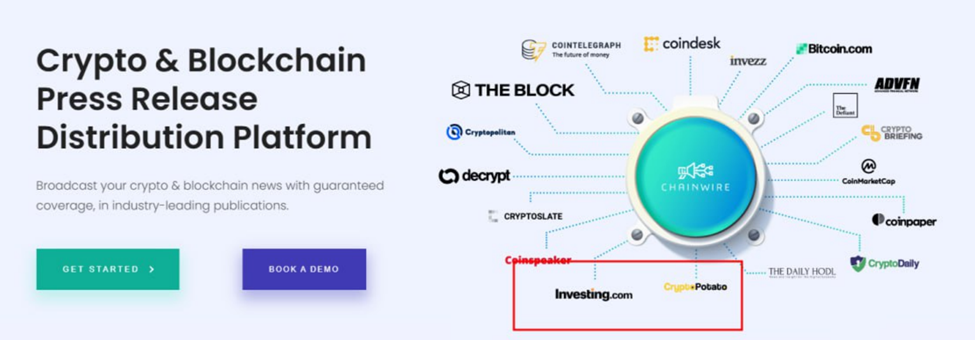
At the core of the paid-PR ecosystem is Nadav Dakner, co-founder and CEO of Chainwire (MediaFuse Ltd.), which markets “guaranteed coverage” across crypto and TradFi sites.
“Broadcast your crypto & blockchain news with guaranteed coverage, in industry-leading publications,” read an excerpt on the Chainwire website.
A source close to the matter told BeInCrypto that Nadav is the force behind the article takedowns.
Chainwire mirrors the practices highlighted by Chainstory: syndication to dozens of outlets in exchange for visibility, often leveraged to influence retail behavior.
Despite scrutiny, Chainwire remains influential:
- Named “Best PR Wire” at the 2026 CoinGape Awards (February 2, 2026).
- Maintains strong G2 ratings for 2025 campaigns.
Meanwhile, Dakner’s past ventures provide further context. He co-founded MarketAcross and InboundJunction and was involved in the 2017 Gladius Network ICO, which raised approximately $12.7 million in ETH.
The SEC settled with Gladius in February 2019 for unregistered securities violations, requiring refunds and registration, but no fines due to self-reporting.
Gladius dissolved later that year without full compliance, leaving investors uncompensated.
Court documents from Gladius v. Krypton Blockchain Holdings (2018) describe Dakner introducing Gladius to Krypton Capital (founded by Ilan Tzorya). InboundJunction appeared in the whitepaper as a marketing/PR partner.
Some reports frame Dakner as the de facto CMO and investor. Investigative reporting by FinTelegram and CryptoTicker (October 2025) notes proximity to funding conduits linked to broader fraud networks involving figures such as Gery Shalon, Vladimir Smirnov, and Gal Barak.
Importantly, these connections are indirect, as no charges were filed against Dakner.
Chainwire also faced separate 2025 allegations of exploitative practices, including unpaid “test” campaigns and ghosting publishers.
Notably, no direct link exists between Dakner or Chainwire and Chainstory takedowns.
However, overlap in ecosystems and timing raises questions about whether commercial relationships suppress critical reporting.
The Quiet Amplifiers That Shape Crypto Markets
Chainstory’s research exposes a market where credibility can be bought, manipulated, or quietly erased. When critical reports vanish from archives, it reinforces the opacity and manufactured legitimacy that fueled the original concerns.
For retail participants within crypto’s hype-driven environment, skepticism is essential. Verification via on-chain data, independent sources, and awareness of PR revenue dependence is crucial to avoid falling prey to the pay-to-play cycle.
In crypto’s ongoing information wars, the quietest edits—deleted posts, altered archives, and erased analysis—may speak loudest, revealing the subtle levers that shape perception, sentiment, and ultimately, market outcomes.
Chainwire did not immediately respond to BeInCrypto’s request for comment.
The post Several Crypto Media Remove Scam Study, Sources Allege External Pressure appeared first on BeInCrypto.