A widening gap between market expectations and central bank signaling has emerged as oil prices top $111 per barrel amid the Iran conflict, forcing traders to rethink every rate assumption made this year.
Two days after the Federal Reserve held rates steady at 3.5%-3.75%, futures markets have erased all 2026 rate-cut expectations and are pricing inhike probabilities that no major central bank has endorsed.
The Market-Central Bank Disconnect
CME FedWatch data for the April 29 meeting shows a 89.7% probability of rates remaining unchanged and a 10.3% chance of a hike. The probability of easing stands at zero. One month ago, hike odds were nonexistent.
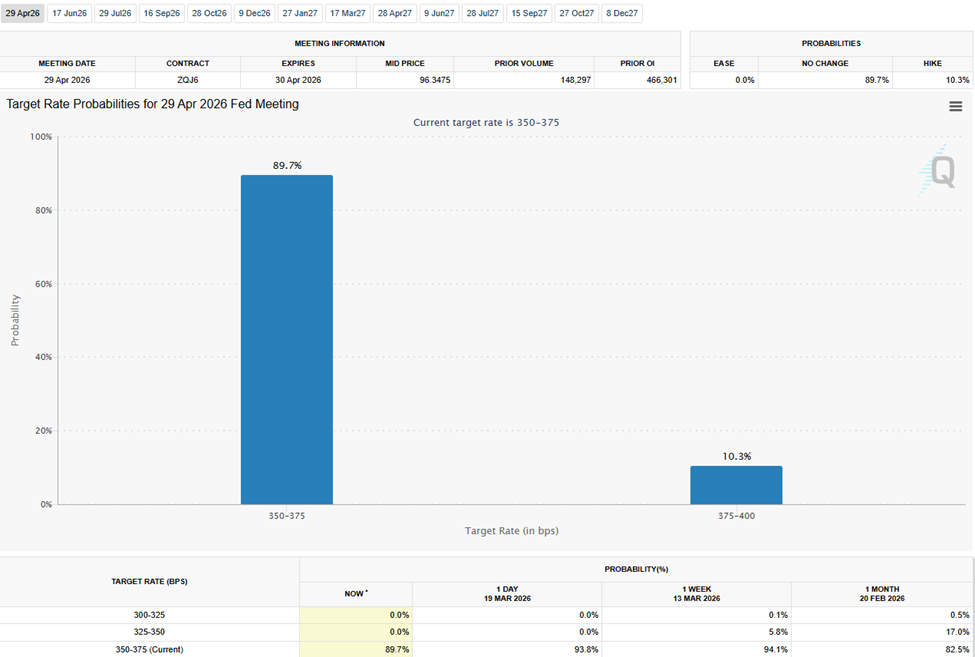
The repricing extends further out. By October 2026, conditional probabilities show the 375-400 basis point range carrying a 28.8% weight, with an additional 4.4% assigned to the 4.00-4.25 range. Odds of a rate cut at that meeting have effectively vanished.
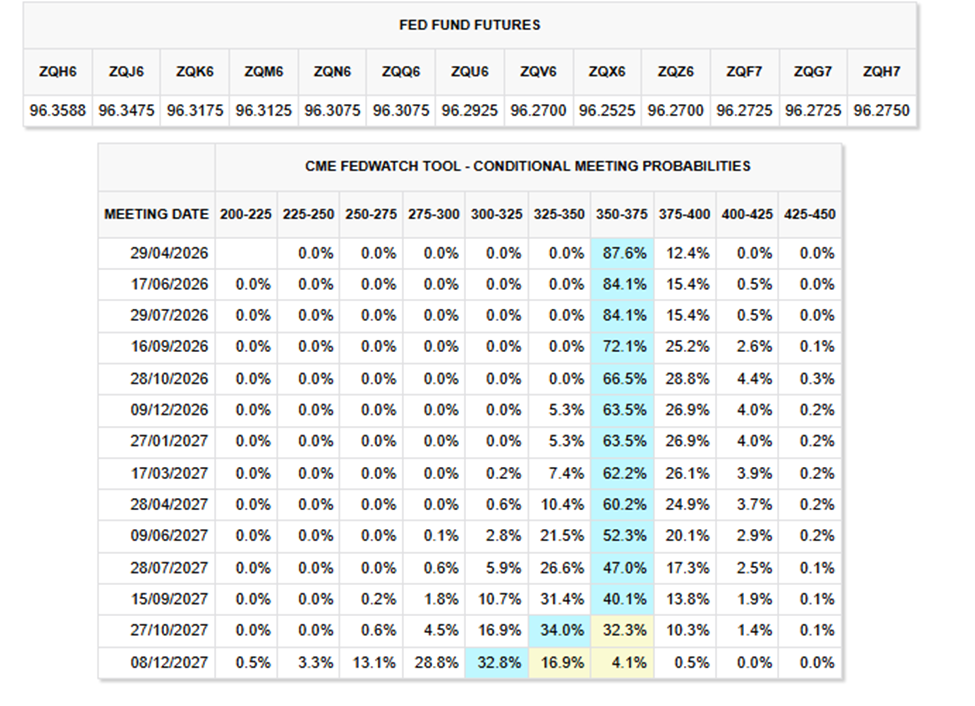
Former International Monetary Fund (IMF) Chief Economist Gita Gopinath challenged the market consensus in a Friday post, noting that, unlike 2021, demand is not surging, which makes a patient approach defensible.
“It strikes me that markets are pricing in more hawkish central bank reaction functions as compared to where central bankers are. I suspect most central bankers are in wait-and-see mode and will want to see through some of the energy price increase,” wrote Gopinath.
What the Fed Actually Said
The Fed’s March 18 dot plot still projects one 25-basis-point cut this year. However, 7 of 19 officials now favor zero cuts, up from 6 in December.
The median 2026 inflation forecast rose to 2.7% from 2.4%, reflecting the expected pass-through of the oil shock.
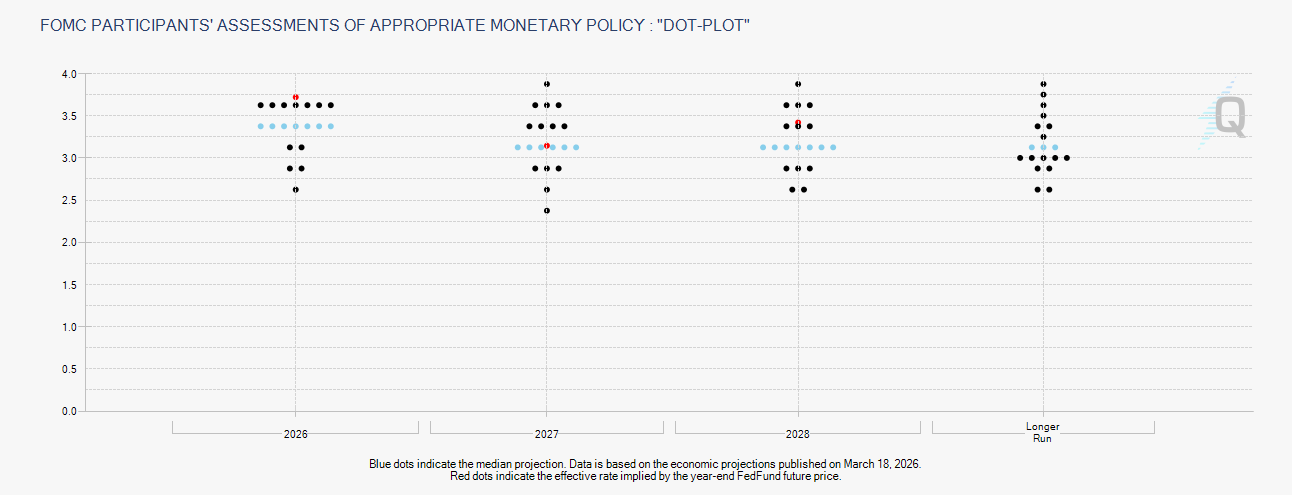
Fed Chair Jerome Powell said the energy-driven price increase may prove temporary but acknowledged deep uncertainty. He told reporters the Fed would not cut rates unless inflation progress materializes.
Meanwhile, the Kobeissi Letter reported that markets have flipped from pricing four cuts earlier this year to now assigning a 50% chance of a hike by year-end.
Analyst Piero Cingari flagged a 54% probability of a hike by October based on current futures pricing.
Goldman Sachs and Barclays have both pushed their first-cut forecasts to September, with Barclays expecting only one reduction for the entire year.
The question now is whether markets are correctly front-running a policy shift or overreacting to an energy shock that central bankers may ultimately treat as transitory.
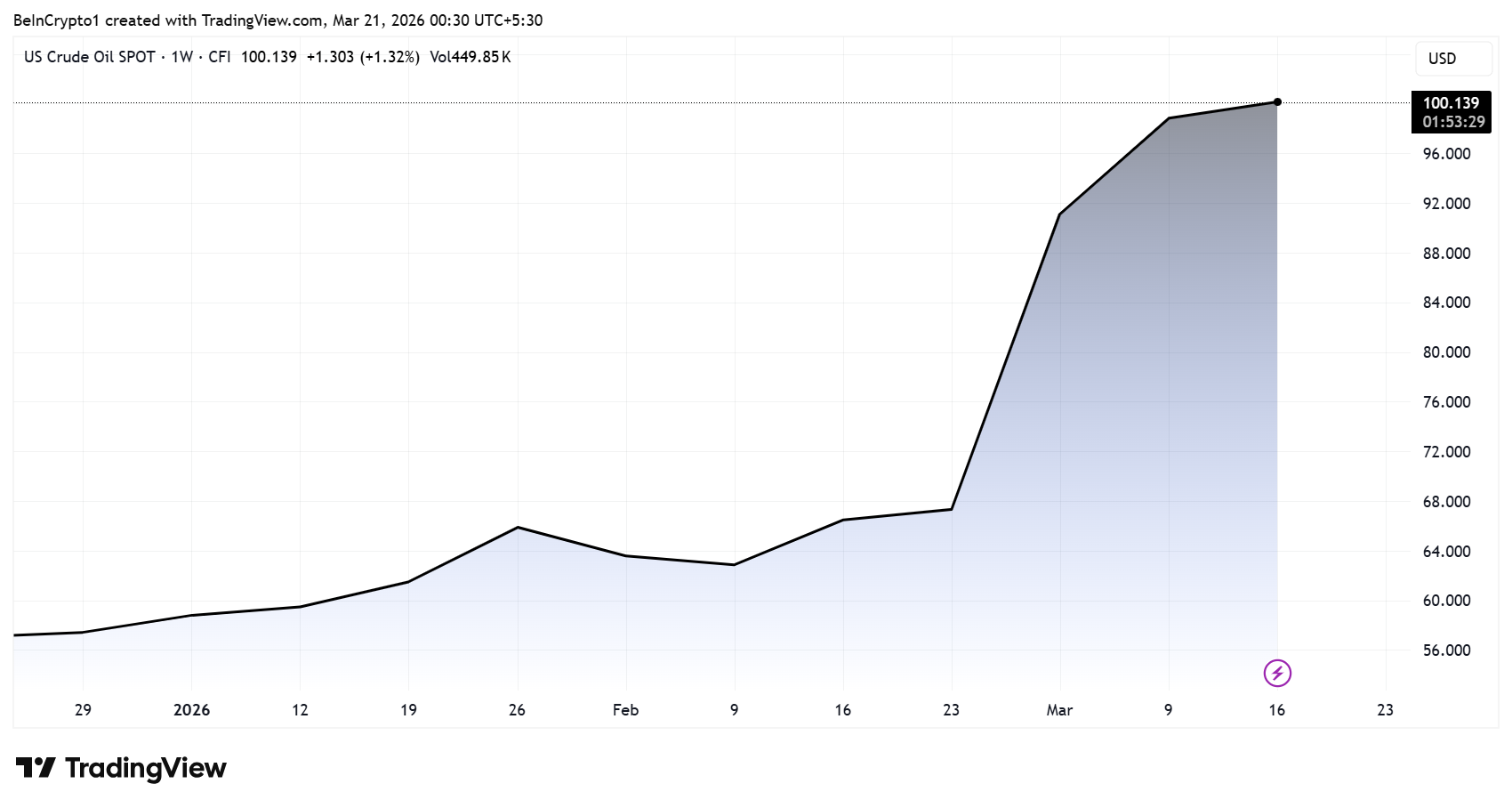
The answer likely depends on how long oil stays above $100 and whether the Iran conflict escalates further.
The post Markets Are Betting on a Fed Hike, But Central Bankers Aren’t Even Close: Who’s Wrong? appeared first on BeInCrypto.