US President Donald Trump’s namesake meme coin has named Robinhood as its preferred platform for a contest awarding Mar-a-Lago dinner invitations. Critics say it is the latest move in a broader pattern of donation and reward.
The story is part of a broader controversy that has continuously drawn conflict-of-interest concerns since Trump began his second term.
Robinhood’s Mar-a-Lago Moment
The page announcing the upcoming conference in April claims that “Robinhood is the Preferred Platform for the TRUMP Leaderboard,” which breaks down who has accumulated enough of the meme coin to attend the gala luncheon and other festivities.
The attendee list has expanded to include the top 297 TRUMP holders. The top 29 holders will be able to attend a VIP reception.
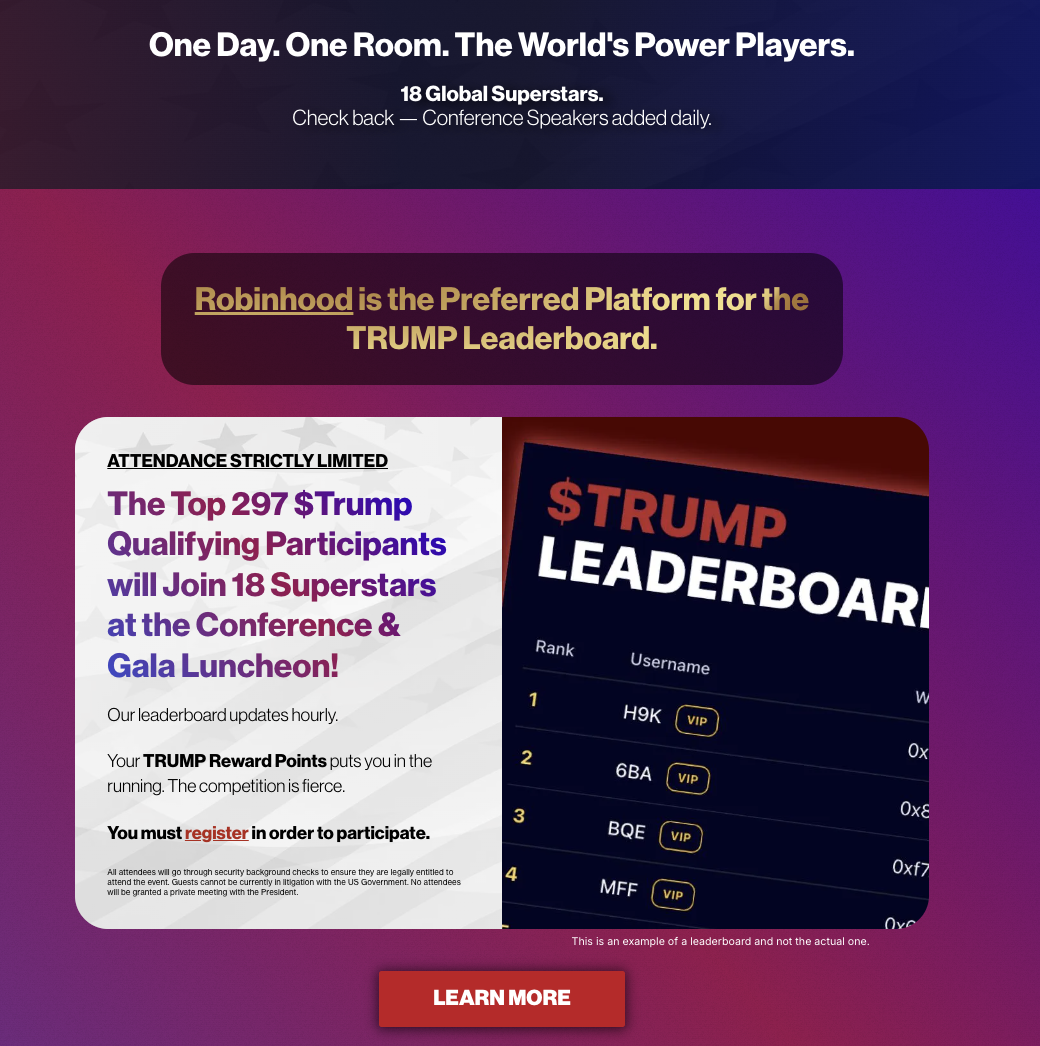
The arrangement goes further than a simple endorsement. Robinhood benefits directly from the trading activity generated by the contest, since competition among holders drives more transactions on its platform. Being embedded in a promotion tied to the president’s personal token is an arrangement without a clear precedent.
Yet, the Robinhood-Trump relationship did not begin with the meme coin.
A Timeline of Mutual Benefit
In the days leading up to Trump’s inauguration, Robinhood donated $2 million to Trump’s inaugural fund. The contribution was the largest publicly announced among major tech firms at the time, double the amounts pledged by Meta, Amazon, and OpenAI.
On inauguration day itself, Robinhood listed the TRUMP meme coin, boosting the token’s credibility and driving a surge in trading volume.
What followed was a string of developments favorable to Robinhood.
The SEC closed its investigation into Robinhood’s cryptocurrency operations in February 2025, declining to pursue any enforcement action. The probe had centered on whether the firm had listed unregistered securities on its platform.
The dismissal was seen as an early sign of the crypto-friendly regulatory shift Trump had promised during his campaign.
The current contest is not the first time Trump has hosted crypto holders at one of his properties, either.
Crypto Conflicts Cloud the Presidency
Last May, Trump hosted a black-tie gala at his Virginia golf club for the token’s biggest buyers, an elite crowd that spent a combined $148 million on the token to secure a spot.
The vast majority of the top holders appeared to be based overseas. Among them was top investor Justin Sun, a Chinese-born crypto mogul who, until recently, was facing civil fraud charges in the United States.
The event drew bipartisan criticism over whether foreign nationals were effectively purchasing access to the president. With a new gala on the horizon, that concern has resurfaced.
Robinhood’s case, it turned out, was just one piece of a larger picture. The SEC has dismissed lawsuits filed or threatened against inaugural donors, including Coinbase, Crypto.com, Uniswap, Yuga Labs, Kraken, and Ripple.
The post How Robinhood Went From Trump Donor to His Preferred Crypto Platform appeared first on BeInCrypto.