
Pakistan has given crypto platforms until Sept. 5 to enter its new licensing regime or stop serving the market, moving the country from broad crypto policy toward formal supervision.
The Pakistan Virtual Assets Regulatory Authority, or PVARA, opened a licensing portal on Aug. 22 after issuing final virtual-asset service regulations a day earlier.
Bilal Bin Saqib, PVARA's Chairman, said:
“This market [previously] existed without a clear regulatory pathway. Today, that changes. We now have the rules, the regulator and the licensing framework to bring virtual assets into the formal economy, protect consumers and build the foundation for the next generation of financial infrastructure. Today we built the rules. Now we build the opportunity.”
The deadline applies to providers that were already operating in Pakistan when the Virtual Assets Act took effect on March 5. Those firms must submit an application for a no-objection certificate, or NOC, which serves as preliminary regulatory clearance allowing them to move toward full licensing.
A timely, complete application lets an existing provider continue offering its current services while PVARA reviews the filing, although the regulator can impose interim limits on onboarding, products, transaction volumes, or custody.
Firms that do not apply by Sept. 5 must stop the affected services. PVARA has said continuing to operate without an application after the deadline will constitute an offense.
The rules do not amount to a nationwide crypto ban. Instead, they create a comply-or-exit framework for exchanges, custodians and other virtual-asset businesses already targeting Pakistani users.
PVARA considers a provider within scope if it markets or solicits customers in Pakistan, onboards users there, or supports Pakistani rupee payment rails. Simply having a website or app accessible in the country is not enough if the company does not target Pakistani customers and takes reasonable steps to prevent onboarding.
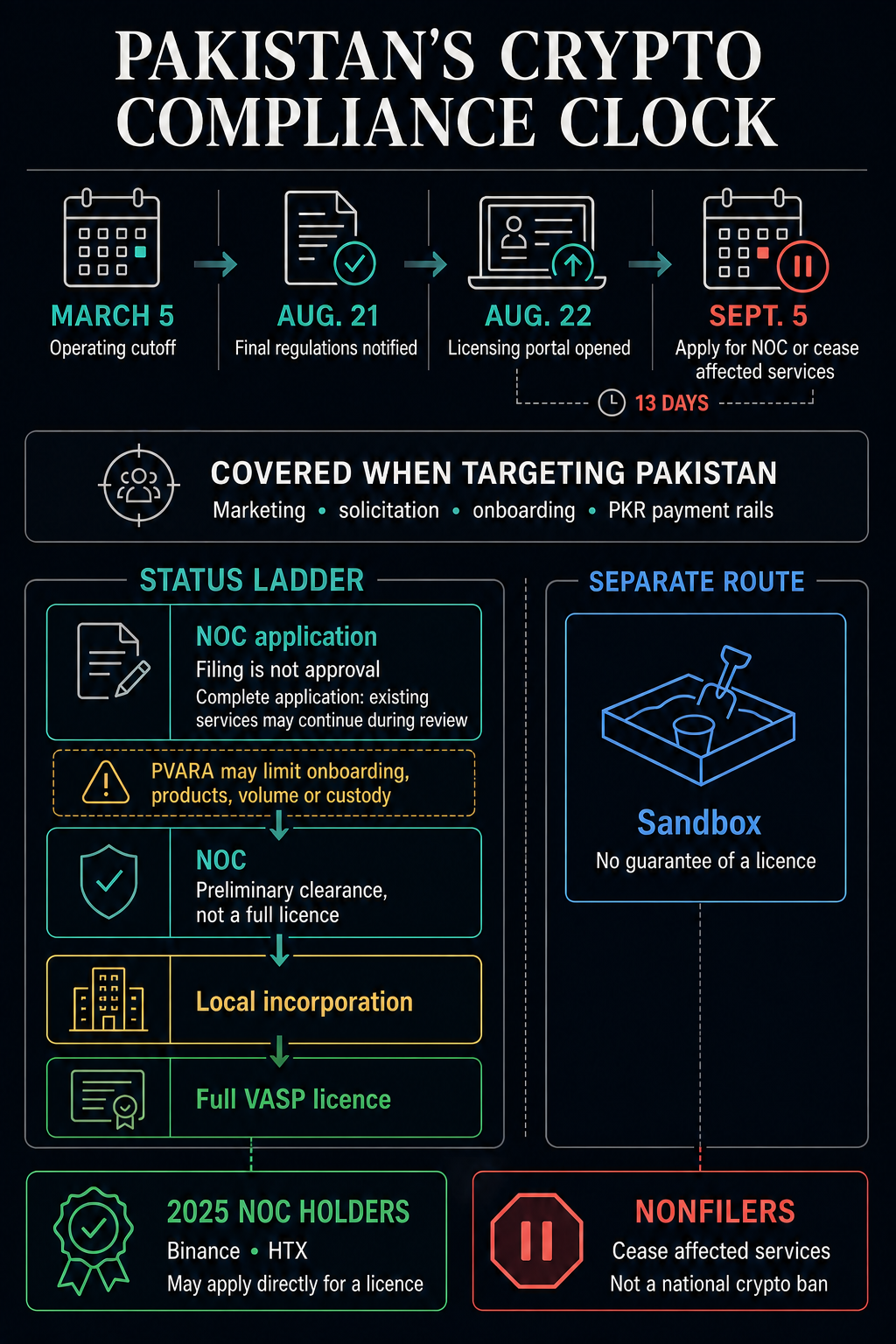
Meanwhile, receiving an NOC does not mean a company has obtained a full virtual asset service provider license. Instead, that step only allows the firm to proceed with compliance requirements and local incorporation before submitting a full license application.
Binance and HTX are already further along in that process, having received NOCs in December 2025. Under the new transition rules, both can apply directly for full licenses rather than seeking fresh preliminary clearance.
PVARA has also opened a separate regulatory sandbox for companies testing new products, though participation does not guarantee eventual licensing.
For customers, the immediate impact will depend on whether their platform enters the regulatory process. The rules require nonfilers to stop covered services but do not prescribe a single process for shutting down trading, withdrawals or custody accounts.
Licensed providers, however, must segregate customer assets, keep them available for timely return, and maintain withdrawal and claims channels during an orderly wind-down.
The Sept. 5 deadline therefore gives crypto firms serving Pakistan a clear choice: enter the licensing process and continue under regulatory oversight, or leave the market.
The post Pakistan gives crypto platforms a September 5 deadline to comply or leave appeared first on CryptoSlate.