

The US stock market opened lower on February 17, 2026. It is the first session after Presidents’ Day, with the S&P 500 trading around 6,840 at press time. The Index is down approximately 0.65% (around 44 points) from Friday’s high, but up almost 0.58% since today’s open. This hints at buyers stepping in across sectors.
Persistent “SaaSpocalypse” fears that AI will disrupt traditional software and tech models continue to pressure the market. This makes Information Technology the weakest sector, down 1.5% intraday. Synopsys, Inc. (SNPS) leads the top laggards, falling 1.6% amid broader AI anxiety.
Top US Stock Market News:
• Empire State Manufacturing Index: The New York Fed’s survey showed modest regional expansion in February at +7.1. It is slightly below January’s +7.7 but above forecasts. This leading gauge for US factory activity offers some reassurance against slowdown fears.
• Canadian CPI Cools: January headline inflation eased to 2.3% YoY (from 2.4%), driven by lower gasoline prices. The softer print strengthens the disinflation narrative and could preview similar trends in US data, supporting Fed rate-cut hopes.
• US-Iran Indirect Talks Resume: Discussions in Geneva today focused on nuclear issues and de-escalation. Progress could help stabilize oil markets and reduce volatility in the energy and global trade sectors.
S&P 500 Tests Key Level As AI Disruption Fears Weigh on Wall Street
Wall Street remains cautious on February 17, 2026, with the US stock market trading mixed but overall subdued amid persistent SaaSpocalypse fears. The S&P 500 opened weaker, briefly dipping below its 100-day EMA before reclaiming it.
The index stabilized around 6,834–6,841 mid-session, down 0.65% intraday from its February 13 high.
The trend suggests the market might recover mildly, but the key to a broader recovery lies above the highs set on February 13 (Friday).
This echoes the late-November 2025 scenario. The index lost the 100-day EMA on November 28 but reclaimed it quickly the next session, triggering a strong rally. The S&P 500 gained approximately 7.38% from late November into late January.
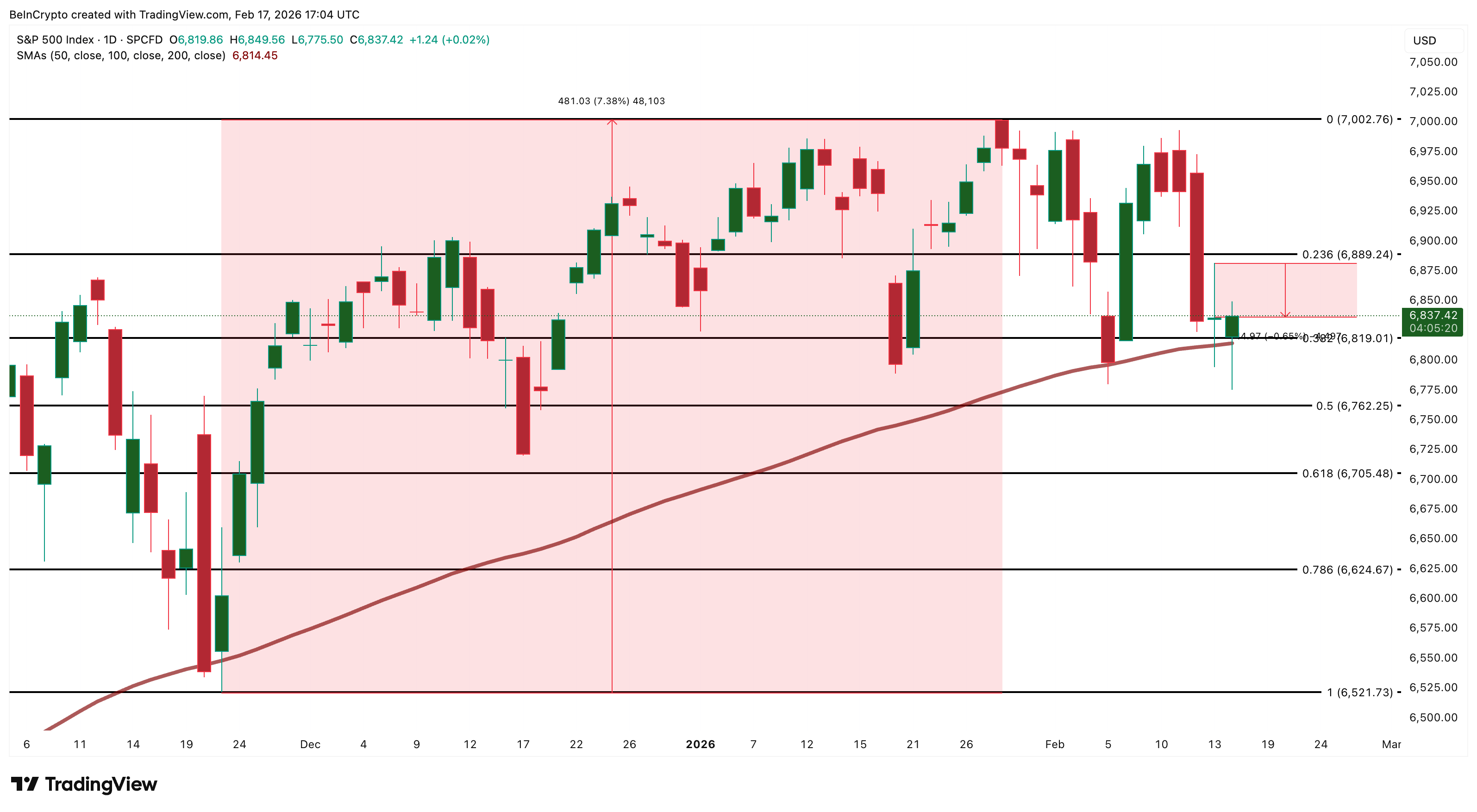
The 100-day EMA has acted as strong support since then. Key support now sits around this zone, at around 6,819. A close below could invite broader weakness toward 6,762 and 6,705. A decisive push above 6,889 (above Friday’s high) could target the psychological 7,000 level.
However, stagflation-like concerns (sticky inflation, growth slowdown) and AI disruption anxiety limit upside conviction.
Nasdaq Composite trades deeper in the red, highlighting tech’s drag. Tech’s 33% S&P 500 weight amplifies the impact on the broader index.

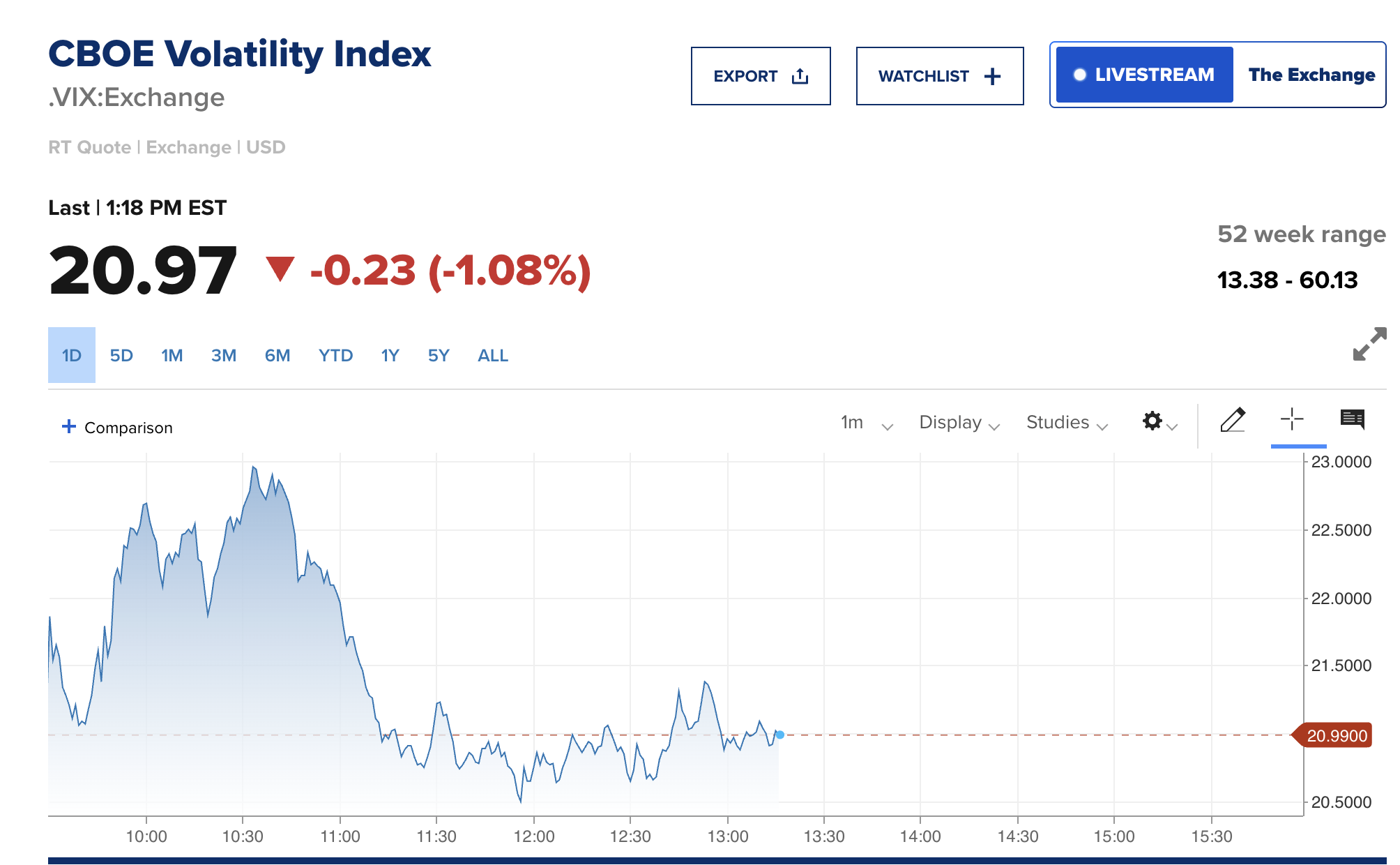
VIX, the Volatility Index, eased 1.08% to 20.97 (from higher early-session levels), signaling reduced volatility as the day progressed, though still elevated relative to recent lows and reflecting caution.
The US 10-year Treasury yield is 4.05% (down modestly today, near 2.5-month lows).
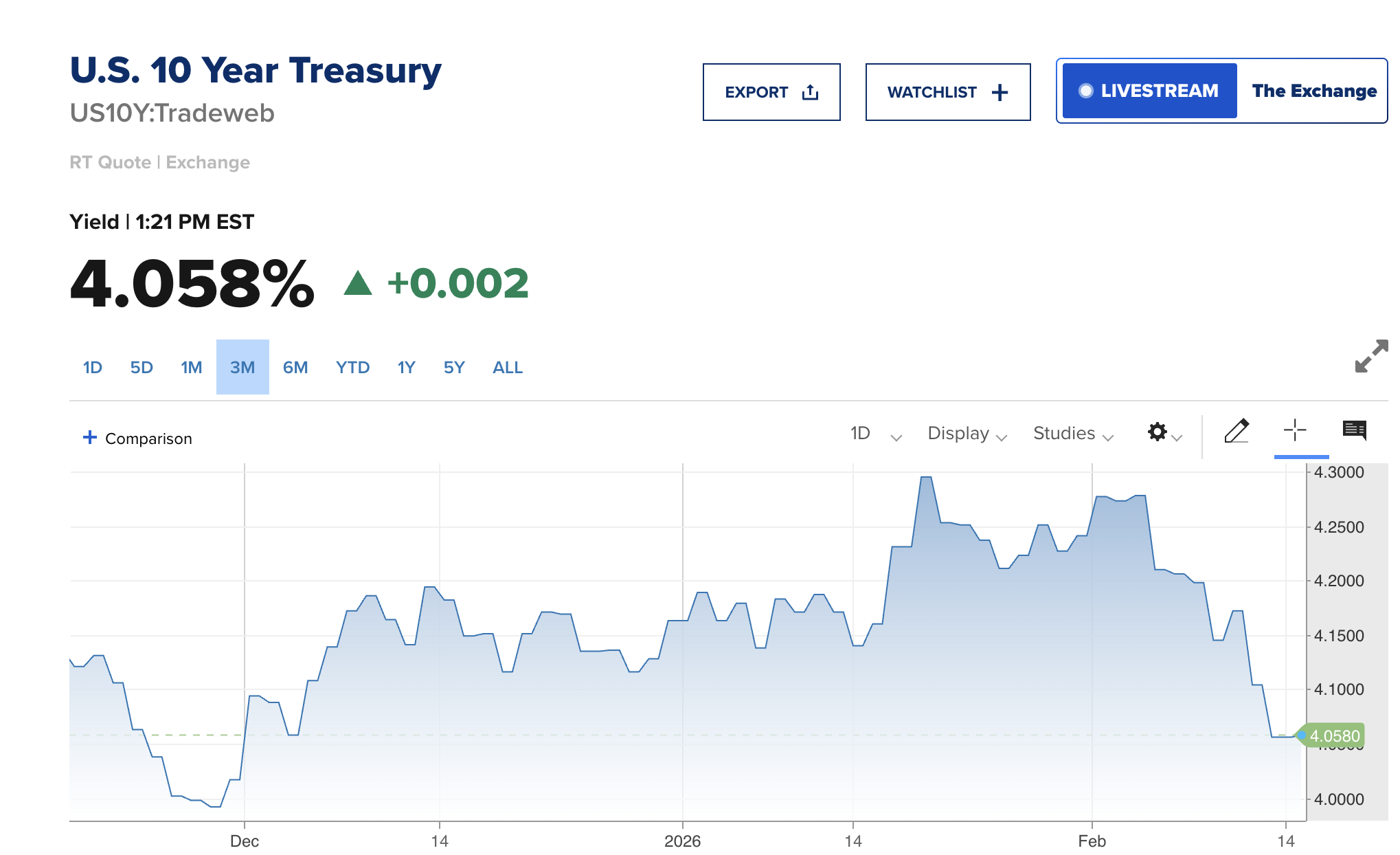
It reflects flight-to-safety flows and softer inflation expectations; supportive for bonds but pressuring growth stocks and crypto amid delayed rate-cut bets.
Sector Rotation in Focus: Defensives Shine While Tech Drags
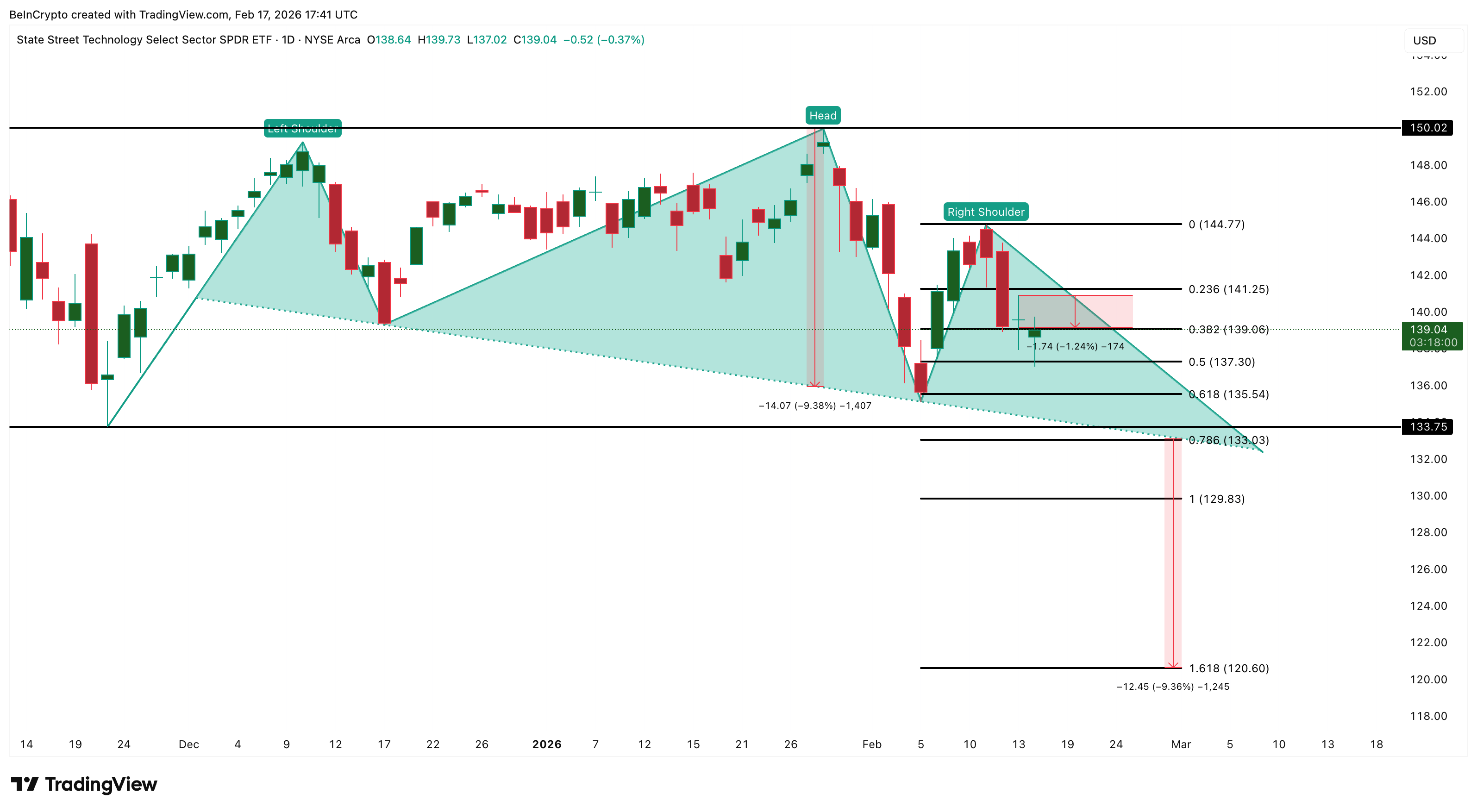
The US stock market’s mixed tone on February 17, 2026, reveals pronounced sector rotation. Technology (XLK) is the standout laggard, down approximately 1.24% from February 13 highs (currently trading -0.37% on the day).
XLK is the Technology Select Sector SPDR Fund, managed by State Street Global Advisors, one of the flagship sector ETFs that slices the S&P 500 into its 11 GICS sectors for targeted exposure.
It tracks major tech names (Nvidia, Microsoft, Apple) and software/semiconductor companies. This makes XLK sensitive to growth sentiment and AI-related developments.
The XLK chart shows a developing head-and-shoulders pattern, a bearish structure. The neckline holds steady near 133; a decisive break below could confirm the pattern and trigger a 10% downside move (measured from head to neckline), potentially pushing toward 129 or even 120 in a deeper correction if broader market conditions or AI concerns worsen.
Utilities (XLU) continues to show relative strength after rallying 2.5% on Friday. While it’s down 0.40% today in line with broader weakness, the sector remains the strongest performer on a weekly basis.

This flow, from growth/tech into defensives and value, explains why the S&P 500 can trade flat-to-lower despite green pockets: tech’s 33% index weight magnifies XLK weakness, overshadowing gains elsewhere.
The bearish setup invalidates on a reclaim of 141–144; a move above 150 would fully negate the threat.
Synopsys (SNPS) Drops 4.4% As AI Anxiety Hammers Software Stocks
Synopsys (SNPS) is one of the standout US stock market laggards. It is trading at approximately 419 after dropping 4.43% intraday, at press time.
As a leading EDA software and semiconductor IP provider, SNPS is closely tied to the software infrastructure subsector. This leaves it vulnerable to ongoing concerns that AI may reshape chip-design workflows.
In the Technology Select Sector SPDR Fund (XLK), SNPS carries a modest weight of 0.72%. This limits its direct ETF impact but serves as a strong proxy for software weakness (e.g., ORCL -3.85%, CRWD -5.12%, FTNT -4.11%).
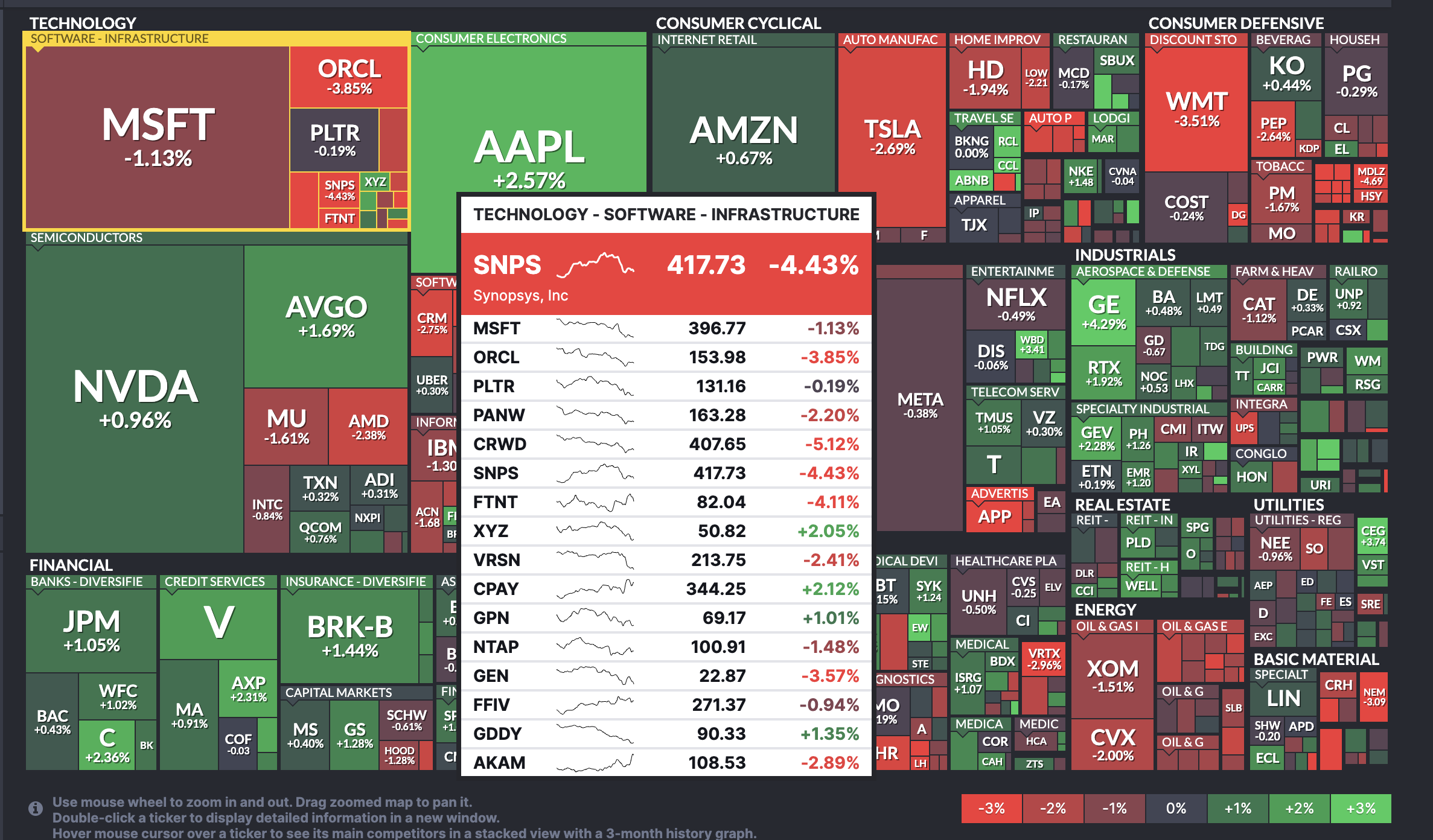
The daily chart shows SNPS trading inside a bear flag pattern following a 24% correction that began January 12, 2026, with the February 4 rebound/consolidation keeping price contained within the flag. It attempted a breakdown today, but buyers defended so far.
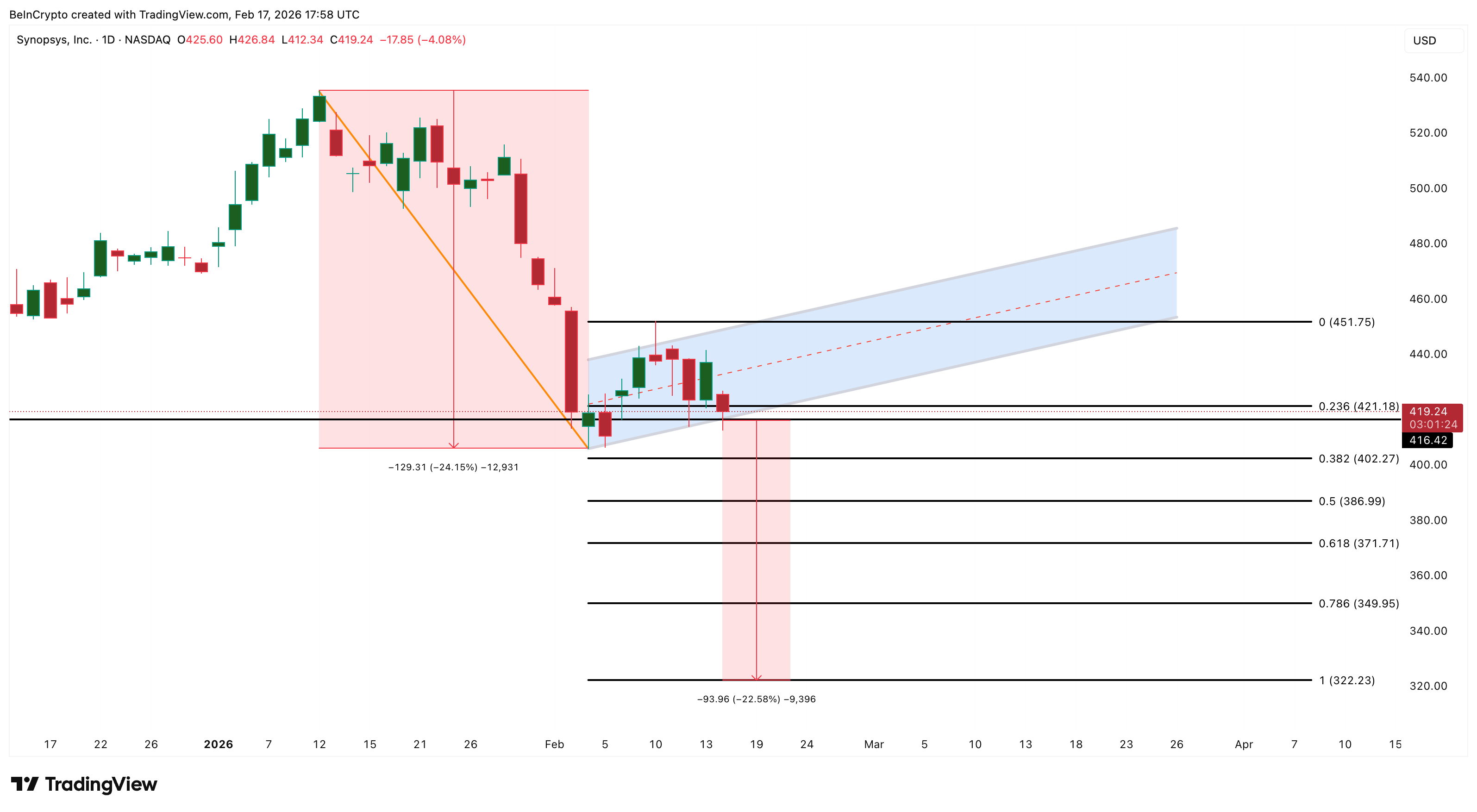
A confirmed break below 416 could activate the pattern, projecting downside toward 322 (over 20% from current levels). Intermediate support levels sit at 402 and 371.
The bearish setup invalidates on a reclaim of 451. This reinforces rotation away from software/growth names into defensives, adding to Nasdaq’s relative pressure.
The post Why Is the US Stock Market Down Today? appeared first on BeInCrypto.