
Bitcoin has entered its fifth consecutive month of red candles, yet it still shows no clear signs of a long lower wick that would suggest strong buying support. At the same time, whale data indicates persistent selling pressure. A fresh dump could emerge if demand fails to absorb the supply.
Short-term traders should closely monitor several warning signals in February. The following analysis highlights the most critical factors.
Whale Inflow Ratio on Binance Surges in February
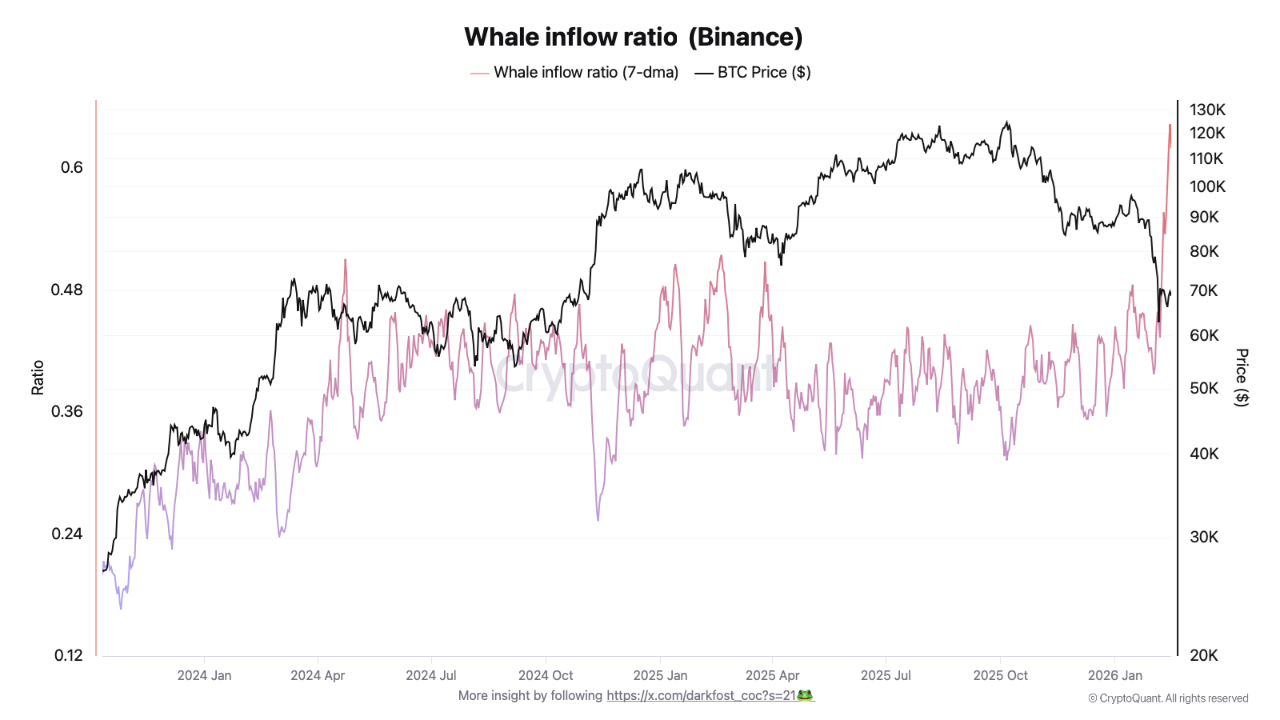
The Whale Inflow Ratio measures the proportion of BTC inflows from the top 10 largest transactions relative to total exchange inflows. A higher ratio suggests stronger potential selling pressure from large holders.
Bitcoin’s drop below $70,000 in February coincided with the seven-day average of this ratio reaching its highest level in more than two years, according to CryptoQuant data.
“This activity does not appear to be isolated, as several whale transactions with significant amounts of BTC have been sent to the exchange. Binance’s deep liquidity plays a role, but the uncertain market environment is also prompting all types of investors to reassess their exposure and strategy,” Darkfost, an analyst at CryptoQuant, explained.
What drove this surge in inflows? A significant portion appears linked to Bitcoin transfers from a wallet labeled by Arkham as belonging to Garrett Jin.
Garrett Jin, a Chinese entrepreneur and former CEO of the now-defunct exchange Bitforex, gained attention after successfully shorting the market during last October’s crash.
Arkham data shows that since the beginning of February alone, the wallet’s balance has declined by more than 10,000 BTC. Since August last year, when Bitcoin traded above $110,000, the address has offloaded more than 67,000 BTC.
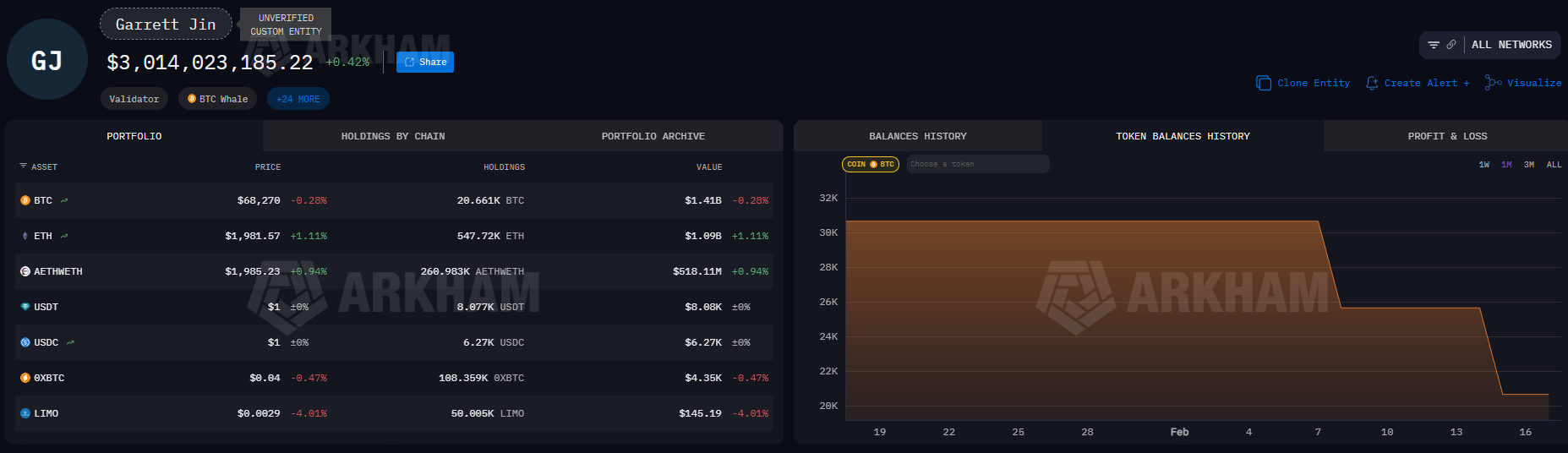
Lookonchain, an account that tracks notable on-chain movements, reported that Garrett Jin transferred 5,000 BTC to Binance and sold the assets during February.
The key question remains whether he will continue moving BTC to exchanges. Another concern is whether other whales are following a similar strategy.
Bitcoin Enters a High-Volatility Phase
Whale activity during an uptrend can be absorbed by new demand without triggering sharp declines. In such cases, coins change hands to investors willing to buy at higher prices. However, when large inflows occur amid negative sentiment, the risk of a new dump increases.
That risk becomes more pronounced as Bitcoin Historical Volatility reaches its highest level in a year.
Historical Volatility measures the magnitude of Bitcoin’s price fluctuations over a specific past period. Elevated readings signal the potential for large short-term price swings.
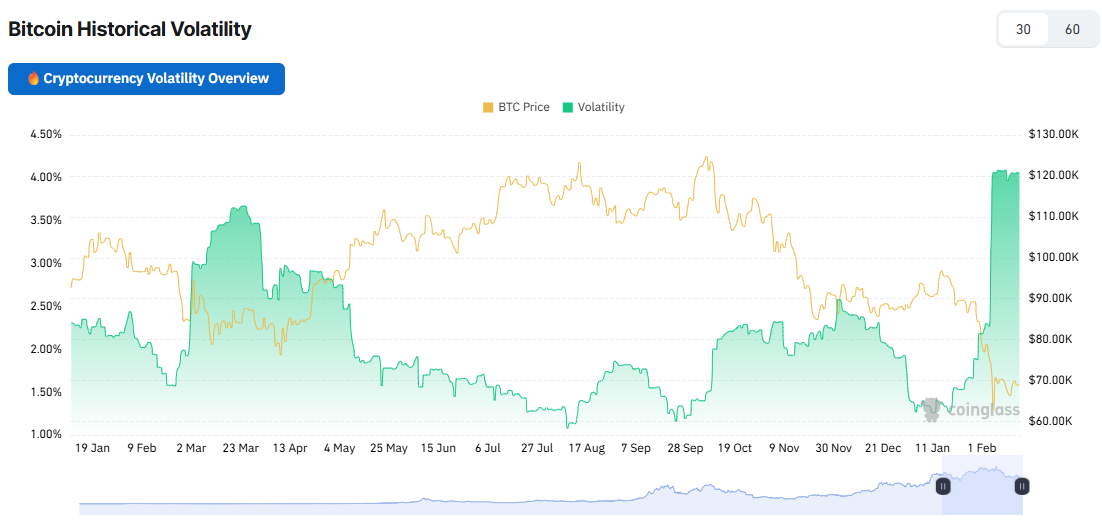
While this indicator does not predict whether the market will turn bullish or bearish, combining high Volatility with surging whale inflows suggests an elevated probability of renewed downside pressure.
According to BeInCrypto’s latest analysis, accelerating selling pressure could push Bitcoin down toward the $55,600 zone, aligning with the deeper bear-flag projection. Conversely, Bitcoin must reclaim the $70,800 level to stabilize in the short term.
The post Why Bitcoin Could Face Another Dump in February appeared first on BeInCrypto.