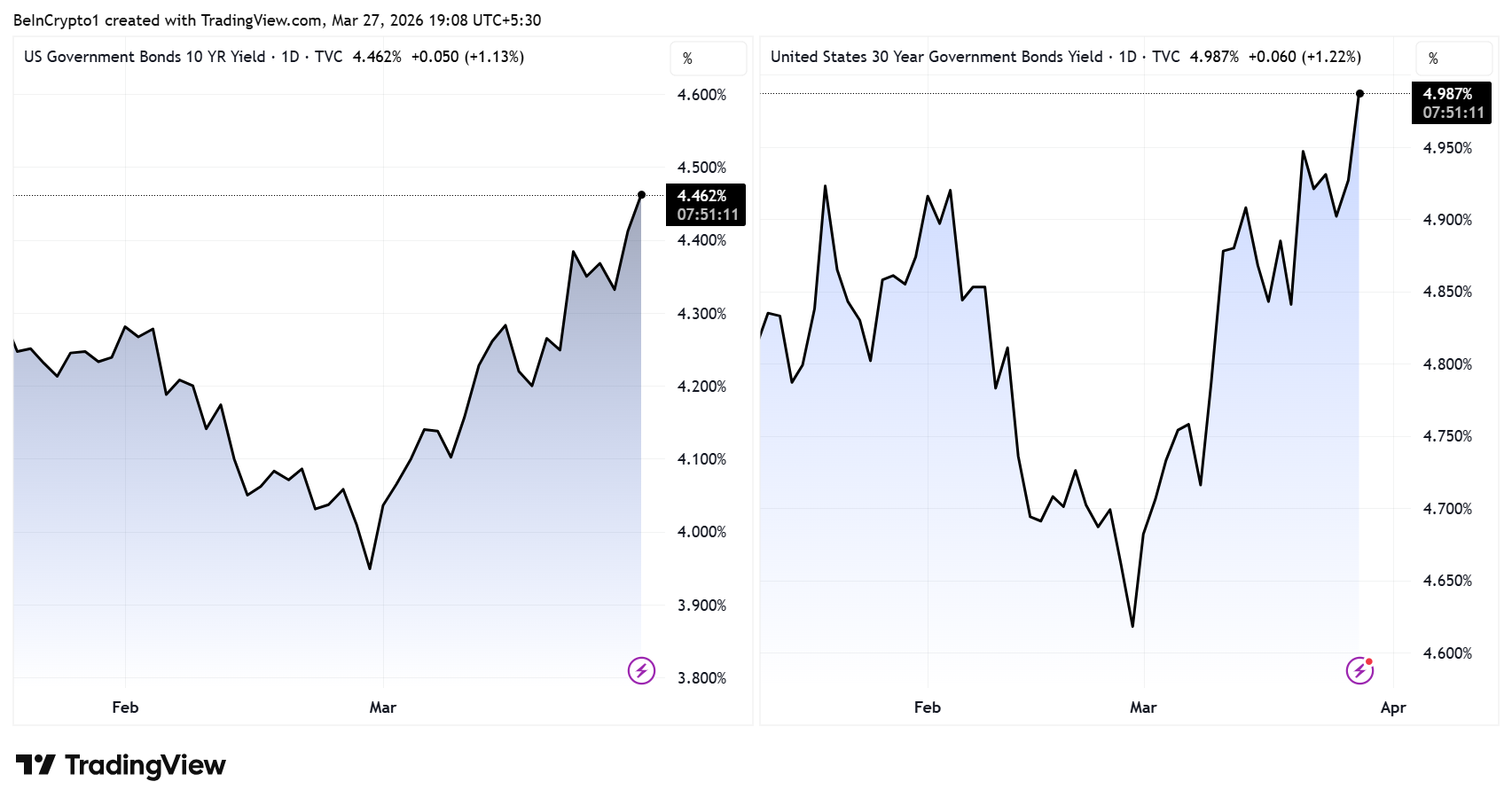
US Treasury yields surged across the curve on March 27, with the 10-year note hitting 4.46% and the 30-year climbing to 4.986%. The moves mark the sharpest bond selloff since the tariff crisis of April 2025.
Markets are now pricing in the possibility of a Federal Reserve rate hike rather than cuts. The shift comes roughly one month into the US-Iran conflict that began with strikes in late February.
Bond Market Hits April 2025 Warning Levels
The 10-year yield is now approaching the 4.5% threshold that triggered a dramatic policy reversal less than a year ago.
In April 2025, when the benchmark yield breached that level, Trump paused his reciprocal tariffs within hours, calling the bond market “a little bit yippy.” That precedent is now front of mind. Crypto analyst Max Crypto noted the historical pattern and predicted a new Trump intervention to calm markets.
Peter Schiff drew the same parallel, referencing Trump’s own language. He questioned whether the president would now “pause the war” just as he paused tariffs when yields touched 4.52% last April.
“On April 9, as the 10-year U.S. Treasury yield rose to 4.52%, Trump paused the Liberation Day tariffs. In his words, the bond market got “yippy.” The 10-year Treasury yield is now 4.46% and rising. Once yields top 4.52%, the market will go yippy yappy. Will Trump pause the war?” Schiff posed.
Meanwhile, the 30-year yield rose to 4.986%, the highest since September. That long-duration move signals persistent fears about inflation and government borrowing costs well into the future.
Short-End Yields Signal Fed Hike Risk
The 2-year Treasury note, the bond most sensitive to near-term Fed policy, has spiked roughly 60 basis points since the Iran conflict began in late February. It reached 4.00% on March 27.
The move is a straight-line repricing of inflation expectations, and without intervention, the bond market may be nearing a full-blown crisis.
“Inflation expectations have become so bad that the market is trading like an emergency Fed rate hike is imminent,” wrote Adam Kobeissi.
Indeed, data on the CME FedWatch Tool shows increasing odds of a Fed rate hike in April, potentially reaching 5% as the war escalates.
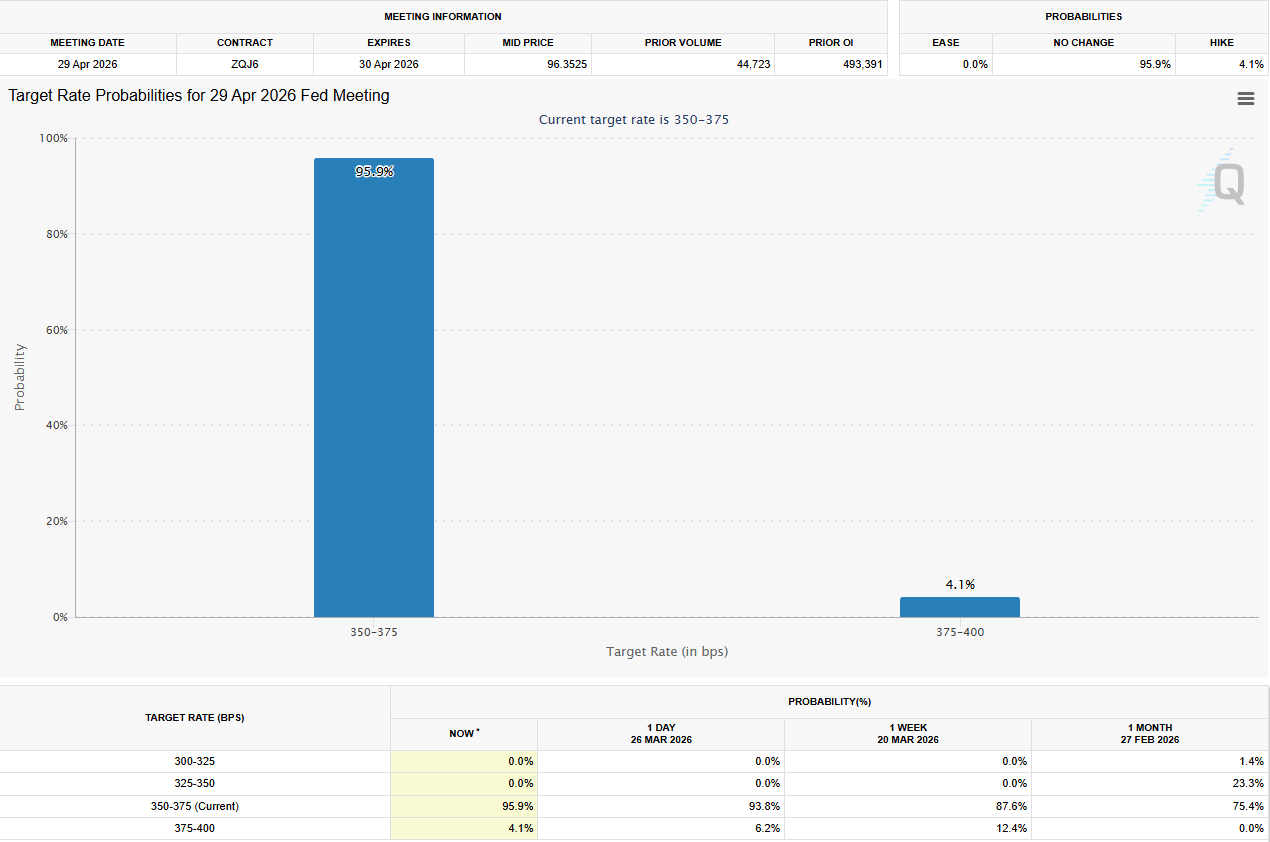
That figure could grow if oil prices, which have surged past $100 per barrel since Iran began disrupting traffic through the Strait of Hormuz, continue climbing.
The conflict has reversed early-2026 expectations for multiple Fed rate cuts.
Global Bond Selloff Extends to Japan
The stress is not limited to the US. Japan’s 10-year government bond yield climbed to 2.38%, its highest since 1999. The surge reflects oil-driven inflation fears in an economy heavily reliant on energy imports.
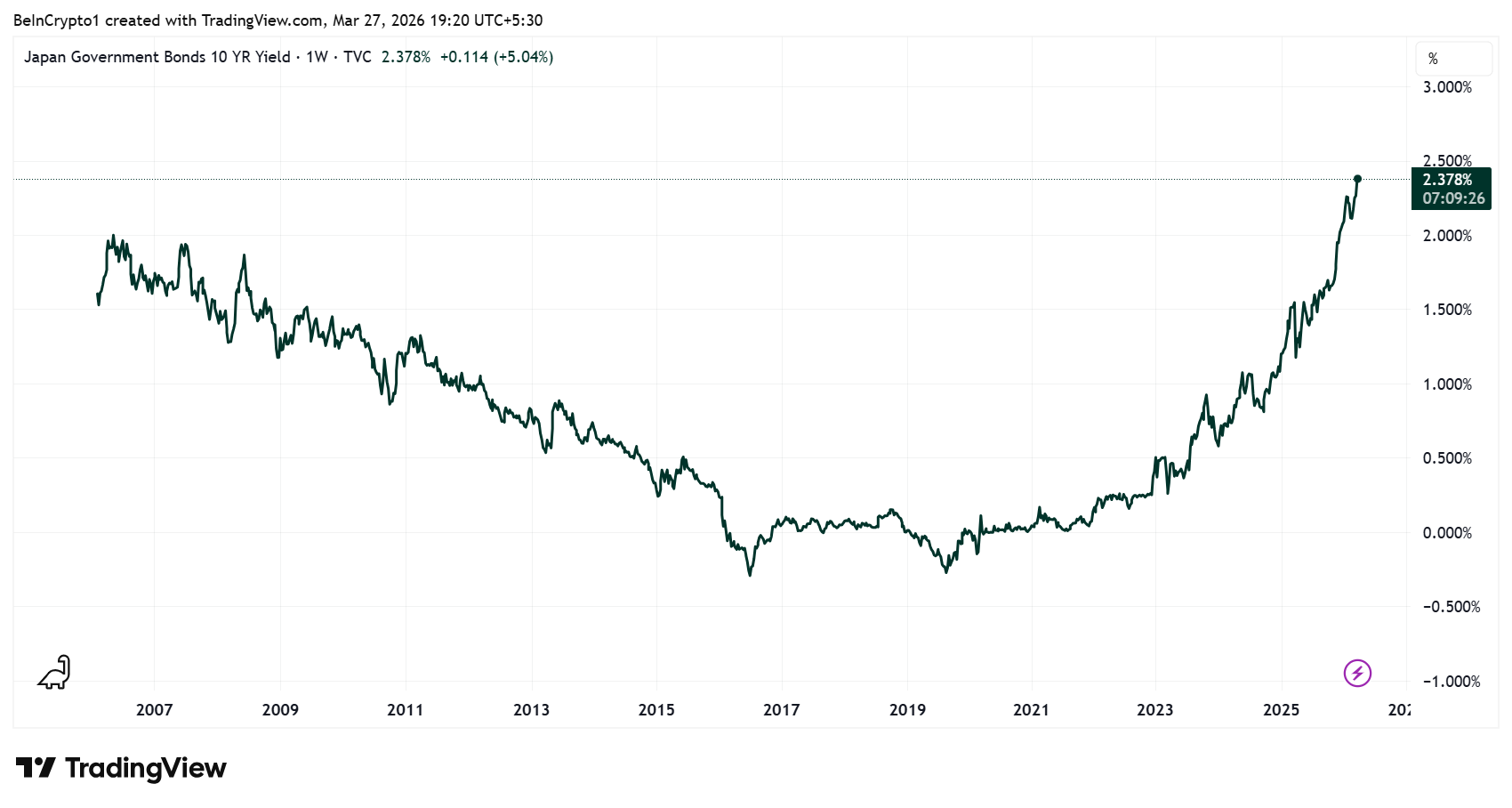
The Bank of Japan kept rates unchanged at its March meeting but left the door open for an April hike.
Analysts now price in a potential 25-basis-point increase to 1%. Rising Japanese yields threaten the yen carry trade, a key source of global liquidity that has historically supported risk assets, including Bitcoin and equities.
For crypto markets, both yield moves matter.
- Higher US yields raise the opportunity cost of holding non-yielding assets like BTC.
- Rising Japanese yields risk triggering forced unwinds of leveraged positions funded in yen.
The bond market forced a policy reversal on tariffs in April 2025. Whether it can force a geopolitical de-escalation remains the open question heading into next week.
If the 10-year closes above 4.52%, history suggests the White House will face pressure to act.
The post Bond Yields Surge Past Danger Zone as Iran War Fuels Crisis appeared first on BeInCrypto.