

Bitcoin has slipped below the critical $70,000 level, falling more than $5,000 within 24 hours and erasing recent gains in a sharp move that has caught traders off guard.
The decline in Bitcoin is not being driven by a single catalyst. Rather, a convergence of macroeconomic pressures is reshaping global risk appetite.
A Macro-Driven Bitcoin Selloff, Not a Crypto-Specific Event
As of this writing, Bitcoin was trading at $69,913, down almost 5% in the last 24 hours and revisiting levels last seen over a week ago.
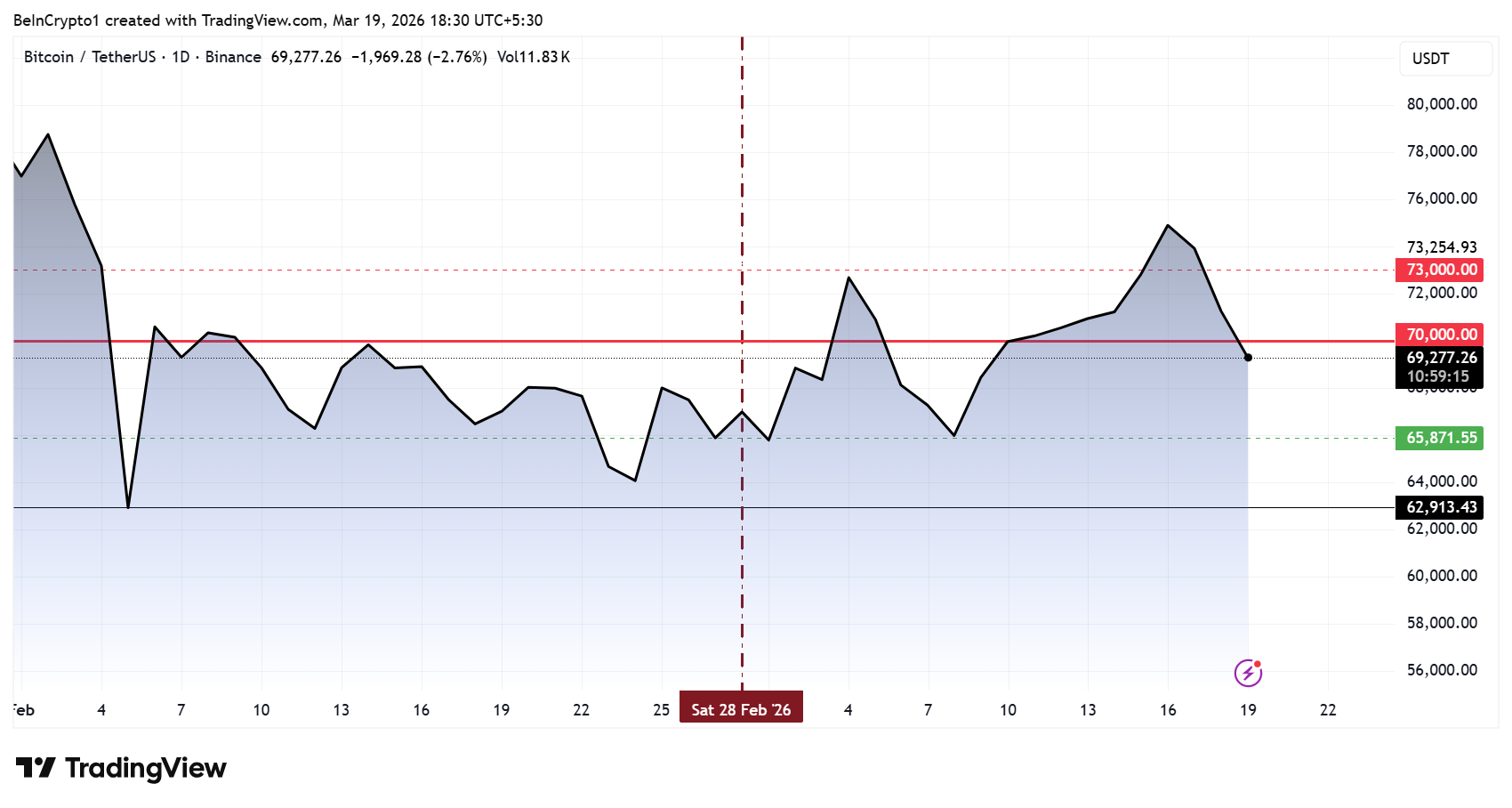
Unlike previous corrections driven by crypto-native factors, this downturn reflects broader global market stress. Specifically:
- Rising inflation
- Delayed interest rate cuts, and
- Tightening liquidity conditions
All these factors are forcing investors to reassess their risk exposure and explain why BTC was unable to hold $70,000 before the next leg up.
With central banks maintaining a “higher for longer” stance, capital is flowing out of speculative assets and into safer instruments such as bonds and cash.
Historically, this environment has been unfavorable for Bitcoin, which tends to perform best when liquidity is expanding.
Energy Crisis Triggers Global Market Repricing
A key driver behind the selloff is an escalating energy shock in the Middle East. Disruptions around the Strait of Hormuz have reportedly cut off a significant portion of global oil supply, triggering what analysts describe as one of the most severe supply shocks in modern history.
Physical crude markets are signaling extreme stress. Oman crude surged to $173 per barrel while Dubai crude climbed above $150, levels far exceeding widely quoted benchmarks like Brent and WTI. This disconnect suggests that global oil markets have not yet fully priced in the severity of the shortage.
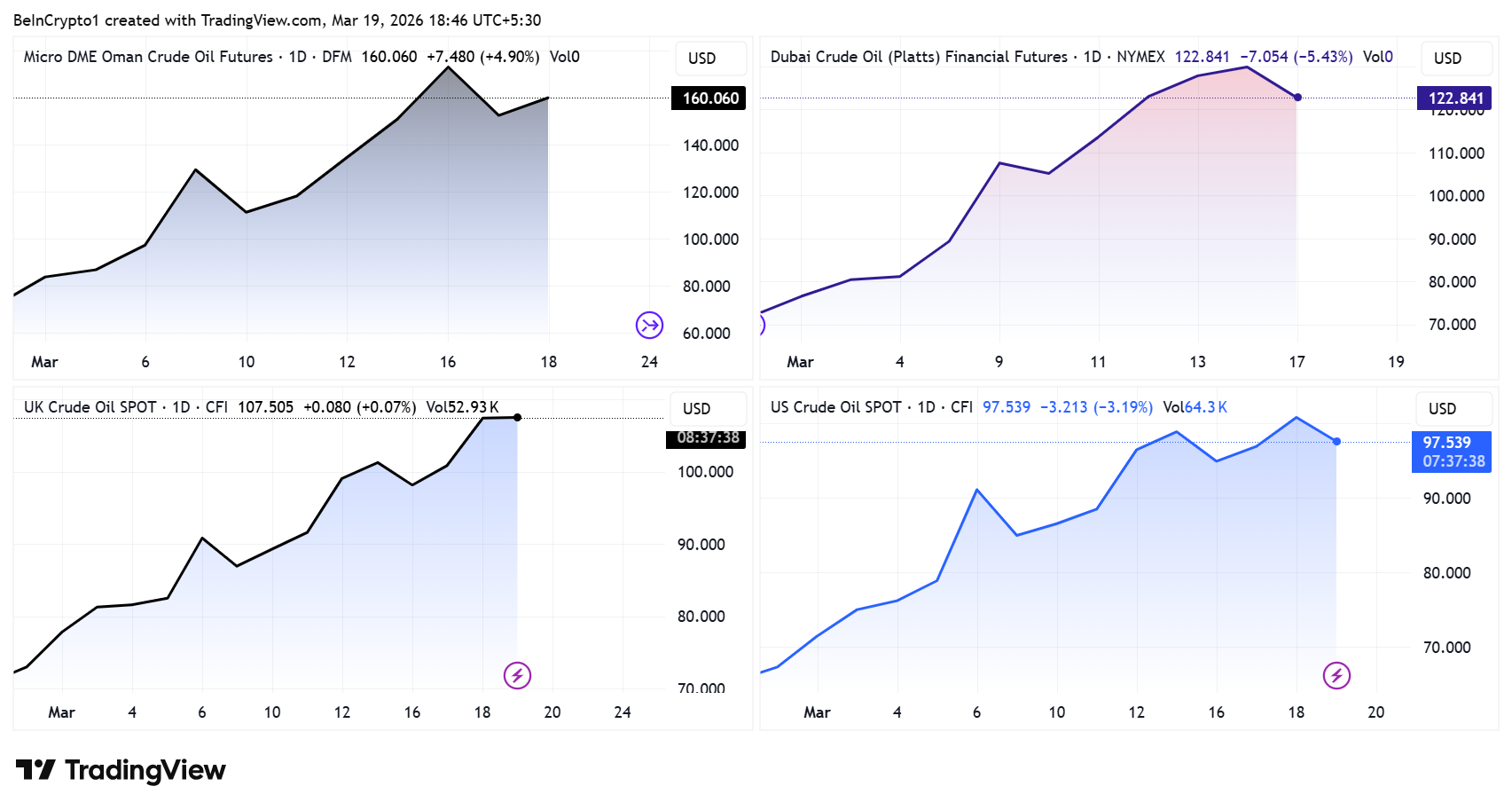
As energy prices surge, inflation expectations rise, forcing markets to push back anticipated rate cuts even further.
Gold and Silver Confirm Broader Market Stress
The selloff is not isolated to crypto. Traditional safe-haven assets are also under pressure, reinforcing the idea that this is a macro-driven event.
Gold fell 5%, while Silver dropped more than 10% in a single day. These declines suggest investors are not rotating into safe havens, but instead liquidating positions across asset classes.
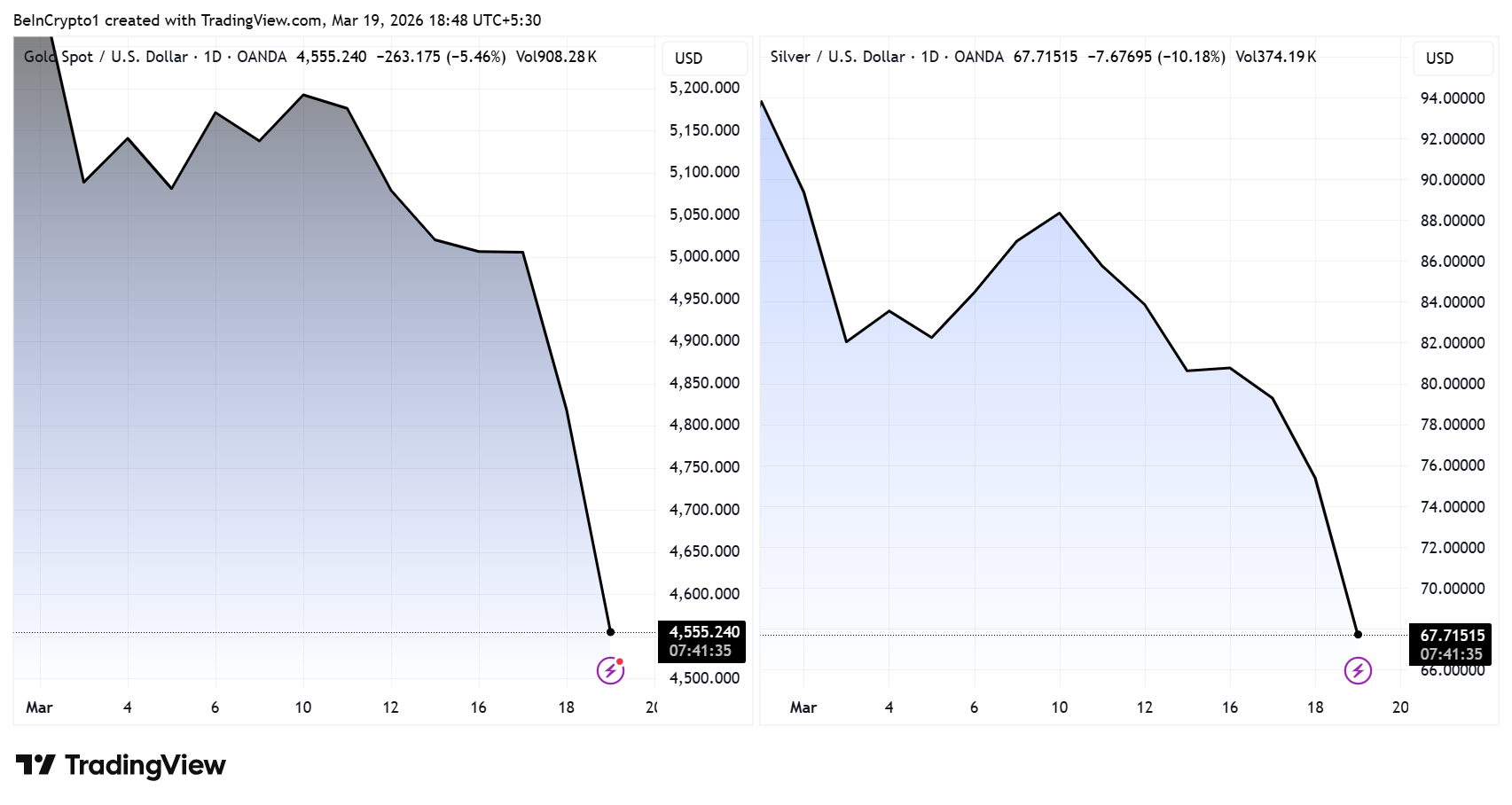
Gold is now down nearly $1,000 per ounce from its recent peak, highlighting how quickly sentiment has shifted.
Oil Market Signals Point to a Hidden Global Shock
One of the most important signals in the current environment is the widening divergence between Brent and WTI oil prices.
Brent crude (used as the global benchmark) has surged to around $115–$119 per barrel, while WTI remains lower near $95–$99. This gap reflects a “war premium” tied to disruptions in Middle Eastern supply chains, particularly affecting Europe and Asia.
Analysts warn that the full impact has yet to hit Western markets. If supply disruptions persist, U.S. and European inventories could tighten further, potentially pushing global prices even higher.
Liquidity Conditions Turning Against Risk Assets
The Federal Reserve’s decision to hold rates steady while signaling no immediate cuts has reinforced the “higher for longer” narrative.
This is tightening financial conditions at a time when markets had already priced in rate cuts by mid-2026.
According to market observers, this shift has forced a rapid repricing of risk assets, with Bitcoin dropping from $72,400 to below $70,000 in a matter of hours.
Historically, such environments tend to suppress speculative assets as capital seeks stability and yield elsewhere.
What Happens Next for Bitcoin?
Despite the short-term volatility, analysts argue that this type of macro-driven drawdown is not new. During previous rate hiking cycles, Bitcoin experienced significant declines before eventually recovering once liquidity conditions improved.
Crypto strategist Michael van de Poppe notes that while further downside is possible if energy markets continue to deteriorate, current levels may represent long-term accumulation zones.
“…markets have been tumbling as another escalation is unfolding in the Middle East. If this doesn’t consolidate, I don’t see a reason for the markets to run higher. I would assume we’ll see all markets, including Bitcoin, move lower towards the lower regions. However, in the long term, buying at these regions for Bitcoin is great,” the analyst wrote.
Key macro catalysts to watch include the upcoming Fed Chair Jerome Powell speech on March 21 and developments in Middle East tensions.
These factors will determine whether rate-cut expectations return, or whether the current selloff deepens further.
The Bottom Line
Bitcoin’s drop below $70,000 is not just a crypto correction. It reflects tightening liquidity, rising energy-driven inflation, and global geopolitical stress.
As markets continue to reprice risk, Bitcoin remains highly sensitive to macroeconomic conditions.
The post Bitcoin Slips Below $70,000 In A Selloff Too Big for a Single Explanation appeared first on BeInCrypto.